.jpg)

.jpg)
Beneath the Surface of Darkness
I have assembled this book as a journey through the ideas of Homer, Plato, Socrates, Virgil, and the Qur'an. I draw on the words of scholars, poets, and religious thinkers, setting their wisdom beside my own reflections. I am interested in what lies beneath the surface of darkness: how I can understand freedom, remain true to my values, and make use of the gifts I have been given.
To me, freedom means more than doing whatever I please. I want the freedom to make my own decisions, but I also want the discipline to stay the course. I believe that every person has a purpose and deserves to be treated with dignity, trust, and confidence. Although I have not always found approval or assurance in the past, I continue searching for a way to live faithfully, even in solitude.
War, economic hardship, and the mistakes of others can make that search difficult. I look at the losses caused by conflict and wonder how much human promise has been thrown away. At the same time, I keep returning to the value of peace, obedience to conscience, and silence. When the world seems crowded with demands and political arguments, silence can comfort me. Joy and compassion bring me closer to the religious ideas that have shaped my life.
The voice of Socrates speaks to me in this search. In his account of his trial, he describes a divine sign that had warned him against certain actions since childhood. Yet it did not oppose him as he faced a sentence that others regarded as a terrible calamity. I take from that account a question I cannot easily dismiss: what if the thing I fear is not necessarily an evil? I do not claim to know what lies beyond death. I can, however, question the certainty with which people speak about it.
Homer reminds me of another side of mortality. In the Iliad, material possessions can be taken, exchanged, or regained, but a life cannot be brought back once it has passed. I place that thought beside the biblical teaching in Leviticus 17:11 about life and blood. Together, these passages lead me to think about the sacredness of life, the limits of power, and what I owe to other human beings.
I also think about family, intimacy, and the long periods in which I have felt alone. I have tried to understand fidelity, desire, celibacy, and the responsibilities that accompany fatherhood. My thoughts turn to the monks of Mount Athos, whose withdrawal from ordinary life suggests a different way of pursuing honesty, meditation, and prayer. I do not pretend their path answers every question I have about love. Their example nevertheless helps me examine my own retreat and the hopes that accompany it.
In private reflection, I return to the wish to find a partner and share a peaceful life. My interests in human anatomy and fertility are part of a broader attempt to understand the relationship between the body, morality, and love. I want to express those interests without losing sight of the autonomy of
other people. I have learned that I can desire companionship and still recognize the importance of another person's freedom.
I find myself moving between religious traditions. I hear the declaration that Allah alone is wise, and I think about the humility required to admit that my own knowledge is limited. My ideas do not always fit neatly into a single system. I read, question, and return to the texts, hoping that what I learn will allow me to face life with greater patience.
When I consider the United States, I think about national independence, civic life, and the possibilities of a better economy. I am grateful for the opportunity to study and write, although I remain troubled by divisions that prevent people from living in peace. I want to believe that
my reflections can contribute, however modestly, to a world in which people have room to develop their abilities.
The ancient observation that I take myself wherever I travel stays with me. A change of place cannot, by itself, resolve what troubles my mind. I remember the landscapes of Jacksonville and Saint Augustine, Florida, the imagined freedom of riding a horse in the morning sun, and the closeness of family. I also remember the beginning of the COVID-19 pandemic, when isolation made me think more deeply about the limits of retreat and the need for other people.
During that period, I felt both sympathy and uncertainty. I listened to the summer winds and struggled to understand why suffering and abandonment seemed so near. Sometimes the language of faith gave shape to feelings I could not express otherwise. At other times, I found myself asking questions about public institutions and the role of government. I did not always reach an answer; the act of questioning became part of the journey.
My reading also brought me to the public debate over marijuana and the history of American drug policy. I encountered discussions of the National Commission on Marihuana and Drug Abuse, its recommendations, and the disagreement that followed. I was interested in the distinction between responding to drug use through criminal penalties and responding through social measures. I record these matters as part of my inquiry, not as a claim that every account I have read is beyond dispute.
Against these public questions, I continue to place the words of poets and religious authors.
They ask me what becomes of anger, whether death is the final word, and how I might choose what is higher over what is lower. I am drawn to accounts of the Messiah's victory over death and to philosophical arguments about the immortality of the soul. I read them alongside one another because each challenges me to examine what I believe.
4I cannot make myself wise merely by collecting quotations. If these voices are to matter, I must listen to them, test my understanding, and acknowledge what I do not know. That is how I begin my account: with questions about life and death, faith and freedom, public responsibility and private longing, and with the conviction that the search for understanding is itself worth pursuing.
Editorial note: This is a narrative rewrite of the opening material of Chapter 1 (source pages 2–
5), not a verbatim transcription. Original quotations have been discussed or paraphrased rather than attributed to the narrator as his own words. Subsequent source pages have not yet been
My inner life becomes more credible when it returns me to the ordinary demands of truthfulness.
Nor can I claim that individual piety repairs every social wrong. Justice requires attention to institutions and material circumstances as well as intentions. The call to stand for justice, including when it challenges my own interests (4:135), troubles my desire to remain safely a spectator. I may be tempted to speak grandly of humanity while ignoring a particular neighbor.
This chapter asks me to move in the opposite direction: begin with the person whose difficulty I can understand and whose dignity I can respect.
The source’s cosmic account of restoration and my discussion of accountability are not the same teaching. Their points of contact are questions I have chosen for literary adaptation. I keep that line visible because genuine encounter between traditions depends on being able to recognize their differences.
The Teacher and the Limits of Secrecy
I understand why a reader of difficult religious literature seeks a teacher.
Words acquire depth through language, history, and sustained practice, and a guide may notice mistakes I have grown accustomed to overlooking. I benefit from correction precisely because I do not know everything. Yet the authority of a teacher is not a substitute for careful reading or for my own moral responsibility.
The original pages describe guarded circles of transmission and the care required for intricate teachings. I adapt that concern as a question about the difference between discretion and concealment. Some private conversations deserve protection, and not every student is ready to hear every complex argument at once. But secrecy can also shelter misuse of power. If a guide demands that I suspend conscience, refuse ordinary accountability, or treat their interpretation as beyond question, I have reason to stop and examine that demand.
My understanding of Islamic learning rests on public scripture as well as traditions of study, commentary, and companionship. I may seek a living community, but I cannot manufacture a chain of teachers for myself or imply that reading a few pages has made me a representative of an order. I can write about the desire for guidance without claiming a status I have not earned.
The more serious I become about the inner path, the less interested I am in appearing initiated. I want someone who will tell me when I have misunderstood a word and someone who will challenge me when I have used a correct word to excuse a wrong action. A teacher who makes me more responsible has helped me; a secret that makes me less responsible has not.
History Without a Single Hidden Line
The next movement of the source traces late-antique and medieval Jewish mystical histories, including Merkabah traditions, the vision in Ezekiel, and later textual developments. These accounts belong to their own historical setting. I will not recast those individuals as early Sufis or attribute their writings to Muslim scholars. Instead, I use the transition to ask how I should narrate the emergence of Islamic spiritual disciplines without inventing one seamless genealogy.
I begin with the Qur’an and the earliest Muslim community, then attend to later practices of asceticism, remembrance, and ethical self-examination. I recognize that the word Sufism encompasses many schools, locations, and centuries. The histories of Muslim communities in Iraq, Persia, North Africa, and elsewhere do not collapse into a single master’s secret itinerary. Teachers differed over how to interpret inward states, how to describe divine nearness, and how spiritual practice related to law and communal obligations.
When I compare traditions, I try to compare questions before I compare answers. A Jewish mystic reading Ezekiel and a Muslim contemplative reflecting on a Qur’anic passage may both ask how finite human language approaches divine transcendence. That shared question does not make their scriptures, practices, or historical identities interchangeable. Respect means allowing each tradition to remain legible in its own terms.
tHe genesis of "tHe Continual Journey of tHe muJaHideen "
lies in a profound and persistent inquiry into the enduring questions that have occupied the human mind for millennia: How ought I to live? What constitutes a life of virtue? And what is the nature of the "right path" that leads to true fulfillment and a meaningful existence? I embarks on this intellectual and spiritual exploration not from a position of pronouncement, but as a fellow traveler, deeply immersed in the rich tapestry of philosophical and religious thought. This book is a distillation of years spent wrestling with the profound insights offered by titans of ancient wisdom, from the dialectical explorations of Plato to the guiding narratives of biblical scripture.
It is an endeavor to bridge the chasm between abstract ideals and the concrete realities of human experience, to illuminate how timeless principles of virtue can guide me through the complexities of contemporary life. The intention behind these pages is not to present a rigid dogma or an unassailable doctrine. Rather, it is to offer a contemplative invitation, a space for reflection and introspection. I weaves together personal reflections, historical examples, and observations on the political landscape to demonstrate the omnipresent relevance of ethical considerations. In an era often characterized by rapid change, fleeting trends, and a sometimes-disorienting multiplicity of voices, the bedrock of good conduct remains an indispensable compass.
In this book, I seek to remind me that the pursuit of self-knowledge, the cultivation of moral integrity, and the unwavering commitment to virtue are not mere academic exercises, but fundamental pillars upon which a life of purpose and lasting significance is built.
It is a call to engage with the profound, to question my assumptions, and to actively shape my destinies through conscious, virtuous choices. I's approach is one that honors the allegorical language and philosophical questioning that have long been potent tools for conveying deep truths.
Through these methods, the reader is encouraged to embark on a personal journey of discovery, to confront the perennial struggle between the forces of good and evil, both within the individual soul and within the broader societal fabric. The chapters that follow are a testament to the belief that a life lived in accordance with "right conduct" is not only possible but is the most rewarding and meaningful path one can undertake. It is a path that requires perseverance, a deep wellspring of
PATH OF THE WISE & SACRED GROUND - FIRST-PERSON COLLECTED EDITION
inner strength, and an unyielding pursuit of wisdom, all of which are explored and elucidated within these discussions.
The human journey, in its most elemental form, is a ceaseless quest for meaning and direction. Across the vast panorama of history, from the sun-drenched agorae of ancient Greece to the sacred groves where foundational religious texts were conceived, humanity has grappled with a singular, overarching question: How do I navigate the intricate landscape of existence to live a life that is not only prosperous but profoundly good? This pursuit of "right conduct," of aligning my actions with a higher moral purpose, is not a fleeting philosophical trend but an intrinsic human imperative, a deep-seated yearning that has shaped civilizations and continues to resonate with an urgent relevance in my own complex, rapidly evolving world. It is within this timeless inquiry that the essence of this book, "Right Path Good Conduct," finds its genesis.
Drawing inspiration from the profound dialogues of Plato and the timeless narratives of biblical tradition, In this work, I endeavor to illuminate the enduring principles that underpin a virtuous life. These ancient voices, separated by millennia yet united by a shared understanding of human nature, offer me not a rigid blueprint, but a rich wellspring of wisdom.
They speak of virtue not as an abstract ideal, but as a vital, dynamic force that shapes my character, guides my decisions, and ultimately determines my destiny. Plato's exploration of justice, temperance, courage, and wisdom, and the biblical exemplars of faith, resilience, and unwavering ethical commitment, provide a foundational framework for understanding what it means to live well. These are not mere historical curiosities; they are living principles, remarkably pertinent to the challenges I face today, from the personal struggles of self-mastery to the collective responsibilities of societal harmony.
I present this book as an invitation to embark on a journey of introspection and self-discovery, a journey guided by the wisdom of the past yet firmly grounded in the realities of the present. It is an exploration of the intricate interplay between personal reflection, historical context, and the often-unseen forces that shape my individual and collective destinies. Through personal reflections, historical figures, and keen observations on contemporary events, I seek to weave a tapestry of understanding that underscores the persistent relevance of moral integrity and the pursuit of wisdom. I will delve into the nature of knowledge, the significance of introspection, and the perennial struggle
PATH OF THE WISE & SACRED GROUND - FIRST-PERSON COLLECTED EDITION
between the forces of good and evil, recognizing that this battle is waged not only on the grand stage of society but also within the intimate confines of each human heart.
I examine this question and find that the allegorical language and philosophical questions that permeate these discussions are intended to act as catalysts, prompting readers to consider their own life choices and their profound impact on the trajectory of their lives and the world around them. This is a call to arms, not for conflict, but for the conscious cultivation of character and the deliberate pursuit of a life lived on the
"right path."
PATH OF THE WISE & SACRED GROUND - FIRST-PERSON COLLECTED EDITION
Chapter 1: The Unfolding Path: An Invitation to Inquiry
From the earliest flicker of self-awareness, humanity has been imbued with a profound, often unspoken, yearning: the quest for meaning. It is a drive as fundamental as the need for sustenance, a silent hum beneath the surface of my daily lives that compels me to look beyond the immediate and ask, "Why?" Why are I here? What is the purpose of my existence?
What is my place in the grand, bewildering tapestry of the cosmos? This innate desire to understand my significance, to feel that my lives hold weight and purpose, forms the bedrock upon which my explorations of
'good conduct' will be built. Without acknowledging this deep-seated human impulse, any discussion of morality or ethical living risks becoming an abstract intellectual exercise, detached from the lived reality of my inner lives.
This search for meaning is not confined to any particular culture, era, or belief system; it is a universal human inheritance. I see its echo in the dawn of philosophical inquiry, where thinkers like Plato, grappling with the nature of reality and the good, laid the groundwork for centuries of contemplation. His dialogues, populated by figures like Socrates, reveal a relentless pursuit of understanding, a deep-seated belief that life unexamined is not worth living. This was not merely an academic endeavor but a fundamental engagement with what it means to be human, to possess consciousness, and to seek something more profound than mere survival or fleeting pleasure. The very act of questioning, of probing the assumptions I hold about myself and the world, is an expression of this drive.
It is the seed of contemplation, planted in the fertile soil of my awareness.
Simultaneously, across different lands and epochs, religious traditions have offered profound frameworks for understanding my place in the universe and the purpose of my lives. From the ancient mystics seeking union with the divine to the prophets wrestling with divine will, these doctrines have consistently addressed humanity's yearning for significance. They often posit a reality that transcends the material world, offering narratives of creation, divine purpose, and ultimate destiny.
These traditions, in their own unique ways, reflect the same underlying human need to connect with something larger than oneself, to find solace and direction in a universe that can often appear indifferent or chaotic.
Whether through prayer, ritual, or adherence to sacred texts, individuals
PATH OF THE WISE & SACRED GROUND - FIRST-PERSON COLLECTED EDITION
have sought answers to life's most profound questions, striving to align their existence with a perceived higher order.
Consider the experience of staring up at a star-filled night sky. For countless generations, this sight has evoked a sense of awe, wonder, and perhaps a touch of existential dread. The sheer immensity of the universe, the unfathomable distances, and the seemingly infinite expanse of space can make one feel incredibly small, insignificant. Yet, it is precisely within this humbling vastness that the search for meaning often ignites. I am not merely passive observers of this cosmic spectacle; I am participants. My consciousness, my ability to reflect, to feel, to question, sets me apart.
This capacity for introspection, for turning my gaze inward and outward simultaneously, is the very engine of my search for purpose. It is the spark that ignites the desire to understand the 'why' behind my brief, yet intensely felt, sojourn on this planet.
This inherent need for meaning can manifest in myriad ways. For some, it is found in the pursuit of knowledge, the insatiable curiosity to unravel the mysteries of science or philosophy. For others, it is expressed through artistic creation, the endeavor to capture and convey the ineffable beauty and complexity of human experience. Still others find purpose in service to others, dedicating their lives to alleviating suffering, promoting justice, or nurturing the growth of their communities. And for many, the quest for meaning is deeply intertwined with spiritual or religious beliefs, finding solace and direction in faith and the pursuit of transcendent truths.
Regardless of the specific avenue, the underlying impetus remains the same: a deep-seated human drive to imbue life with significance, to feel that my existence matters in the grand scheme of things.
This universal longing for meaning is not a sign of weakness or a flaw in my design; rather, it is a testament to my unique consciousness. It is what elevates me beyond mere biological existence. Animals, as far as I can ascertain, do not ponder their mortality or question the universe's origins.
They live in the present, driven by instinct and immediate needs. Humans, however, possess the capacity for abstract thought, for memory, and for foresight. This allows me to reflect on my past, contemplate my future, and grapple with the profound questions that arise from my awareness of my own finitude. It is this very capacity that compels me to seek patterns, to construct narratives, and to search for a unifying principle that can make sense of the seemingly chaotic flux of existence.
The quest for meaning is also intrinsically linked to my search for what is
'good.' I inherently desire not just to exist, but to exist well. This desire for a life of value, a life that is morally sound and ultimately fulfilling, is woven into the fabric of my being. It is the fertile ground from which the concept of 'good conduct' emerges. Before I can even begin to discuss the specifics of ethical behavior, I must first acknowledge this fundamental human impulse to find purpose and significance. This is the initial step in my journey, the invitation to inquiry that sets the stage for all that follows.
Think of the profound sense of satisfaction that comes from contributing to something larger than oneself.
Whether it’s raising a child, building a community project, or dedicating oneself to a noble cause, these actions often provide a deep and lasting sense of purpose. This feeling arises precisely because these endeavors connect me to a narrative that extends beyond my individual lifespan.
They are expressions of my desire to leave a mark, to contribute to the ongoing story of humanity. This is the essence of seeking meaning: to feel that my lives have value, not just to myself, but in the wider context of existence. The philosophical explorations of Plato, for instance, were not merely abstract musings; they were deeply concerned with how individuals could live a virtuous life and contribute to a just society. His Republic, while an idealized vision, grappled with fundamental questions about human nature, the organization of society, and the pursuit of the good.
Similarly, religious traditions, in their diverse ways, offer paths for individuals to find meaning through devotion, adherence to divine law, and the cultivation of virtues that foster a harmonious relationship with the divine and with fellow human beings. These diverse traditions, though different in their specifics, all speak to the same fundamental human need to find orientation and purpose in life. This fundamental human drive for meaning is often amplified during periods of transition or crisis. When faced with significant loss, profound change, or existential questions, my usual routines and assumptions can be shaken, prompting a deeper introspection. It is in these moments that the search for meaning can become more urgent, more pronounced. I may find myself questioning my past choices, re-evaluating my priorities, and seeking a renewed sense of direction.
This period of heightened awareness, while often challenging, can be incredibly fertile ground for personal growth and a deeper understanding 9
PATH OF THE WISE & SACRED GROUND - FIRST-PERSON COLLECTED EDITION
of what truly matters. Furthermore, this innate desire for meaning influences my perception of what constitutes a 'good' life. I don't simply want to survive; I want to thrive. I seek not just happiness, but a deeper sense of flourishing, of living in alignment with my values and principles.
This inherent aspiration for a life of quality, of substance, is what makes the exploration of 'good conduct' not just an academic exercise, but a deeply personal and universally relevant pursuit. It is about understanding how to navigate the complexities of existence in a way that is both personally fulfilling and ethically sound.
The contemplative traditions, both philosophical and religious, recognize this fundamental human yearning. They understand that for individuals to truly flourish, they must engage with the deeper questions of existence.
This engagement is not always easy; it requires courage, honesty, and a willingness to confront uncomfortable truths. But the reward is immense: a life lived with greater clarity, purpose, and integrity. By acknowledging this innate drive, I create the necessary space for a meaningful exploration of how I can live lives of consequence, lives that reflect the best of my human potential. This foundational understanding serves as the essential starting point for my collective inquiry into the nature and practice of 'good conduct.' The tapestry of human aspiration, woven with threads of meaning and purpose, finds its most enduring patterns in the enduring wisdom of ancient voices.
Across the vast expanse of history, separated by millennia and continents, yet united by a shared humanity, thinkers and storytellers grappled with the fundamental question of how to live a good life. This pursuit was not merely an academic exercise confined to cloistered scholars; it was a lived quest, etched into the very fabric of their societies and passed down through generations as the bedrock of civilization. These ancient dialogues, parables, and pronouncements offer me not a rigid dogma, but a rich wellspring of insight, a foundational understanding of virtue that continues to resonate with profound relevance in my own complex times.
Consider the fertile ground tilled by the ancient Greek philosophers, whose relentless intellectual curiosity sought to unearth the very essence of human excellence.
Plato, in his seminal dialogues, particularly those featuring the enigmatic Socrates, provides me with an enduring exploration of virtue, not as an abstract concept, but as a vital component of a flourishing individual and a just society. He identifies cardinal virtues that have echoed through
PATH OF THE WISE & SACRED GROUND - FIRST-PERSON COLLECTED EDITION
centuries of ethical thought: justice, temperance, courage, and wisdom.
For Plato, justice was not merely legal fairness, but a state of inner harmony, where each part of the soul – reason, spirit, and appetite –
functions in its proper place, guided by the intellect. When the soul is ordered in this way, an individual acts justly, not out of compulsion, but from an internal equilibrium. This concept transcends mere outward behavior, delving into the very architecture of the self.
Imagine a skilled artisan, where each tool and material is used with precision and purpose, resulting in a masterfully crafted object. So too, the just individual, in Plato's view, is one whose inner faculties are meticulously balanced, leading to actions that are both righteous and intrinsically satisfying. This internal order is the foundation of external justice, reflecting the profound interconnectedness of personal character and societal well-being. Temperance, another cornerstone of Platonic virtue, speaks to moderation and self-control, the ability to govern one's desires and appetites rather than be enslaved by them. It is the calm hand that steers the ship, preventing it from being capsized by the storms of passion or the siren call of excessive indulgence. This is not about asceticism or the denial of all pleasure, but about the intelligent regulation of my impulses, ensuring they serve my higher rational purposes.
Think of a seasoned athlete, who adheres to a strict training regimen and diet, not out of misery, but because they understand that such discipline is essential to achieving peak performance. Their commitment to temperance allows them to unlock their full potential, a testament to the power of controlled desire. In my own lives, the constant barrage of stimuli, from digital distractions to pervasive consumerism, makes the cultivation of temperance more crucial than ever. It is the inner sanctuary of calm that allows me to make discerning choices, to prioritize what truly nourishes my well-being over the fleeting gratification of impulse.
Courage, often misunderstood as mere fearlessness, was for Plato a more nuanced virtue. It is not the absence of fear, but the rational assessment of danger and the steadfast commitment to doing what is right, even in the face of adversity.
It is the strength to stand firm for one’s convictions when challenged, to speak truth to power, and to persevere through hardship. Consider the historical accounts of individuals who, despite overwhelming odds, have stood against injustice, risking their own safety for the sake of a greater
PATH OF THE WISE & SACRED GROUND - FIRST-PERSON COLLECTED EDITION
principle.
rewritten.
.jpg)
.jpg)

.jpg)


EDITORIAL REVIEW AND SOURCE MAP
I also resist borrowing a history of suffering and displacement as decoration for my spiritual narrative. The source mentions the destruction of the Second Temple and the Bar Kokhba revolt in connection with Arabic religious change. These are events in Islamic history. If I wish to write about upheaval in Islamic history, I must research and name its own people and circumstances rather than substituting labels in somebody else’s chronology.
Where My Reading Goes Next
As I close this movement, I see why a long first-person rewrite must be an act of reconstruction, not a hunt for pronouns. The original prose contains Jewish texts, histories, and ideas that deserve accurate attribution. My chosen book, however, follows Qur’anic reflection and Islamic mystical thought. I cannot preserve every sentence and also transform the subject without contradiction.
What I can preserve is the sequence of questions: what is divine nearness, how does scripture invite interpretation, who may guide the seeker, and what responsibility follows from knowledge?
My answer remains provisional. I read, consider, pray, and revise. I do not want the voice of “I” to make a theological argument sound more certain than its sources allow. At the end of a day, I can ask whether I spoke with honesty, whether I listened well, and whether my search made room for another human being. If I have no answer to those questions, the grander language of mystery has done little for me.
The pages that follow will move more deeply into the historical development of Muslim devotional and contemplative life. I will examine terms before repeating them, distinguish Qur’anic text from later commentary, and acknowledge disagreements when they matter. I seek an account that allows wonder without historical confusion and conviction without the need to claim secrets that I do not possess.
Original source basis: Beyond the Veil, PDF pages 13–24 (within original Chapter 1). Recurring subjects include sefirot, contemplative symbolism, tikkun, mystical transmission, Merkabah literature, and the historical development of Jewish mysticism.
Adaptation method: Newly authored first-person Islamic mystical reflection following the source’s conceptual order. This is not a sentence-by-sentence rewrite and is not represented as one. Its narrator describes inquiry and ethical responsibility, not an invented personal history.
Terminology integrity: Sefirot, tikkun, Ezekiel, and Merkabah remain identified as Islamic material. Distinct Islamic discussion addresses Allah’s names, tawbah, justice, Qur’anic reflection, and the diversity of Sufi histories. No scriptural quotation is presented as verbatim translation.
Qur’anic passages for later publication review: 41:53 (signs), 7:180 (beautiful names), 4:135 (justice). These verse references are thematic pointers and should be checked against a selected translation in the final edition.
Editorial status: Reviewed for internal first-person consistency and for overt cross-tradition misattribution within this installment. The entire manuscript has not been fact-checked; remaining source pages and full-book continuity review are outstanding.
BEYOND THE VEIL
Expanded First-Person Islamic Mystical Adaptation Chapter 1 · Section 4
Names, Creation, and the Discipline of Interpretation By Jabril Omar Hakeem Abu Hussein Muhammad What I Can and Cannot Name
I begin this part of my reading with the difference between naming a mystery and possessing it. The earlier pages of the source describe Ein Sof in Jewish Kabbalah as a way of speaking about the divine beyond the reach of ordinary description. I will not replace that term with Allah and call the two doctrines identical. Instead, I return to the Islamic confession of divine oneness and ask what it means for my language to be limited before the One I seek. I speak from a tradition with its own scripture, commentary, and disagreements, and I must be careful not to conceal those differences behind the beauty of a phrase.
The short declaration in Surat al-Ikhlas (Qur’an 112) turns my attention toward the uniqueness of Allah. I can study translations and interpretations of its words, but I cannot treat my explanation as the full measure of the divine.
My sentences are the work of a limited mind. I learn to distinguish the certainty of a confession from certainty about every conclusion that I draw from it. When my writing sounds most confident, I owe it a second reading.
Am I describing something the Qur’an states, recounting an interpretation, or giving voice to my own reflection? Those are not the same act.
I sometimes want an elaborate map of the unseen because a map promises that I can advance by acquiring names. Yet a list of names does not make me honest, patient, or kind. I can spend an evening speaking beautifully about transcendence and still fail someone at breakfast. If my inquiry is to be 1
spiritual rather than merely decorative, it must teach me to recognize that contradiction. I want my language about Allah to deepen responsibility rather than shield me from it.
Creation Without a Borrowed Cosmology
The source next explores tzimtzum, a Jewish mystical account of divine contraction. I cannot present that account as a teaching of the Qur’an, and I do not need to invent an Islamic equivalent to preserve the shape of the old paragraph. The question beneath it is enough to begin anew: how do I understand a created world that is dependent on Allah and yet filled with creatures that act, suffer, and make choices? I approach this question first as a reader of revelation, not as the proprietor of a secret system.
The Qur’an repeatedly draws attention to the heavens, the earth, and the order of created things. When I turn to 3:190–191, I encounter a call to remember and reflect on creation. I do not find there a detailed theory of divine contraction. I find an invitation to attention. The sky cannot explain itself to me in the language of a human book, yet the sight of it exposes the narrowness of my concerns. My duties do not disappear in that moment.
Rather, they return with a different proportion: the quarrel I had enlarged in my mind begins to look smaller, while the harm I dismissed becomes harder to ignore.
In contemplating creation, I distinguish worship from scientific explanation.
Observation and inquiry can teach me about the physical world, and theological reflection may address different questions about meaning and dependence. I do not want to turn an astronomical discovery into a proof-text, nor use spiritual language to replace the patient work of evidence.
I can hold wonder and rigor together. The fact that I do not understand everything is not a reason to pretend that I do.
The Names and Their Demands
The original manuscript spends many pages arranging the sefirot as a structure of divine emanations. Those terms are part of Kabbalistic history.
For my Islamic adaptation, I turn instead to the beautiful names of Allah, mentioned in Qur’an 7:180, and I ask what happens when I remember them in the ordinary movement of my day. This is a thematic replacement, not a claim that the Qur’an contains the sefirot under different names.
I approach the names with reverence and interpretive caution. When I remember mercy, I try to notice the resentment I have been carrying. When I remember knowledge, I ask where I have repeated something without checking it. When I remember justice, I look at the person I have judged without hearing their account. These are modest tests. They cannot exhaust a theological discussion about divine attributes, but they keep my reflection from floating above my conduct. I do not become righteous by selecting a beautiful word and imagining it describes me.
I know that Muslim theologians and contemplatives have interpreted the divine names in different frameworks. I cannot compress those centuries into my private meditation. I can, however, be clear about what I am doing on this page: I am following a discipline of remembrance and ethical self-examination. I seek the guidance of scholars when technical questions arise. My first-person voice should make me accountable for my interpretation, not elevate it into unquestionable authority.
Letters, Words, and the Work of Reading
The source treats sacred letters, numerical patterns, and permutations as pathways into hidden meaning. I acknowledge that Islamic intellectual history has also contained varied approaches to letters and symbolic interpretation. But I cannot turn all such approaches into a single universal method or attribute a particular mystical calculation directly to the Qur’an without evidence. My book will not promise the reader that deciphering a pattern unlocks the structure of the universe. I can explore the power of language while keeping the difference between scripture, commentary, and speculation visible.
When I recite or read, I am tempted to move quickly past familiar words. I remember that interpretation begins with the labor of listening: understanding
a word in context, attending to the passage around it, and recognizing that translations make choices. I may find a metaphor that illuminates my life; I must still ask whether the metaphor is supported by the text or only by my desire to find myself within it. A careful reader can be moved without claiming every moving thought as revelation.
There is room for poetry in this practice. A poem may describe an inward state that a technical definition cannot. Yet poetry cannot serve as a substitute for documenting a historical event or establishing the authenticity of a report.
I will not use an evocative sentence to conceal a missing citation. I want the freedom of literary reflection and the discipline of historical inquiry to remain neighbors, neither pretending to be the other.
What Repair Requires of Me
The source returns to tikkun and the shattering of the vessels, distinctively Jewish mystical concepts. In this adaptation I turn from that cosmology to repentance, accountability, and care for the world around me. I begin with tawbah: turning back from wrongdoing, admitting what I have done, and trying to change. The movement is not dramatic on every occasion.
Sometimes I must simply tell the truth after I have been tempted to embellish it. Sometimes I must restore what I took, or stop speaking of a person as though I knew their heart.
The Qur’anic demand for justice does not allow me to make my spiritual life a private ornament. In reflecting on 4:135, I hear a challenge to stand for justice even where it touches my own interest. I cannot declare that a wrong has vanished because I have felt forgiven. Where another person has been harmed, the material and human consequences remain matters for action.
Repentance requires more than an inward mood; it asks me to change what I can, and not to claim that everything lies within my control.
My sense of responsibility also needs humility. I am not appointed to repair the whole world through a single book, nor can I substitute a grand spiritual project for the work of others. I can listen to people who know the conditions of their communities, support fair treatment, and examine the uses of power 4
within my own relationships. The more I think about the inner life, the more I see that it is tested where I meet another human being.
The Method I Carry Forward
Before leaving this part of the chapter, I turn toward the original manuscript’s extended discussion of historical-critical method. Its stated ambition is to read older texts in their own historical settings. I want to preserve that ambition even as I change the subject of the book. The writings of Jewish mystics remain Jewish writings; Qur’anic commentary, hadith scholarship, and Sufi literature have histories of their own. I will not join them by changing proper nouns in place. A credible adaptation must acknowledge where it has departed from its source.
For me, this means working with three kinds of sentences. Some state what a source says and must be traceable to it. Some offer a supported historical interpretation and should make room for dispute. Others belong to the first-person narrator, who reflects on what the inquiry means to him. When I allow those sentences to blur, my narrative may sound seamless but become less trustworthy. I would rather make a distinction clear than achieve an elegance that depends on confusion.
I have not completed a fact-check of every chapter. I do not claim an initiatory lineage or firsthand encounters that I cannot substantiate. My work here is to build a voice that can ask serious questions without borrowing false authority. As I move toward the next chapter and the history of Islamic devotional practice, I will pay attention to dates, terminology, sources, and the diversity of interpretation. If this book is to travel beyond my desk, it must be capable of correction. That, too, is part of my search for truth.
EDITORIAL REVIEW AND SOURCE MAP
Source basis: original Beyond the Veil PDF pages 25–41, the concluding portion of Chapter 1. The source discusses Ein Sof, tzimtzum, the sefirot, sacred letters, tikkun, and the study of Kabbalistic texts.
Adaptation: Newly written first-person Islamic reflection in the same conceptual order. No Jewish mystical doctrine is falsely relabeled as Qur’anic teaching. This is not a sentence-by-sentence transformation of the source and does not replace its length.
Distinct thematic anchors: Qur’an 112 (divine oneness), 3:190–191 (reflection on creation), 7:180 (beautiful names), 4:135 (justice). References are thematic; no translated Qur’anic sentence is quoted verbatim. Verify against a selected edition for final publication.
Editorial review: Checked first-person consistency, the distinction between the original Jewish source and Islamic adaptation, and absence of fabricated personal experiences. External scholarly fact-check, comprehensive source concordance, and full-book consistency editing remain outstanding.
BEYOND THE VEIL · EXPANDED FIRST-PERSON EDITION
BEYOND THE VEIL
Expanded First-Person Islamic Mystical Adaptation · Chapter 2, Section 1
Jabril Omar Hakeem Abu Hussein Muhammad
CHAPTER 2 — Echoes of the Ancient: The Journey of the Heart
When I approach the oldest stories about the heavens, I find that the first challenge is not how far I can imagine traveling, but how carefully I can distinguish one tradition from another. The manuscript from which I began speaks at length about the Jewish Merkabah or chariot tradition, the vision of Ezekiel, the heavenly palaces, and later Kabbalistic interpretation. Those materials have their own history. I will not call their texts Qur’anic or assign their symbols to early Muslims. In this new telling, I follow a different route: I ask what the Qur’an says about divine transcendence, how Muslims have understood the Prophet’s Night Journey, and how the language of ascent may illuminate an ordinary life without making me the hero of a supernatural event.
I have often been drawn toward the image of the threshold. A threshold marks a place where I must stop and reconsider what I carry. It may be the entrance to a house, the first line of a book, or the moment before prayer when the noises of my day still demand attention. I can imagine the heavens through layers of poetry and revelation, but imagination does not confer access to what remains unseen. If I am to write about sacred mysteries, I must begin by acknowledging the limit of what I know. That admission does not
BEYOND THE VEIL · EXPANDED FIRST-PERSON EDITION
extinguish wonder. It makes wonder responsible.
A Journey Recounted, Not a Journey I Claim
The Qur’an begins its account of the Night Journey in 17:1, describing the movement of God’s servant by night from the Sacred Mosque to the farthest mosque, with the purpose of showing him some of God’s signs. Muslim tradition connects that journey with the Prophet Muhammad. Accounts of the ascension, often called the Mi‘raj, are elaborated in hadith and later devotional writing. I read these sources as part of the history of Muslim belief and interpretation; I do not present every later literary detail as a sentence found in the Qur’an. The distinction matters because the story’s power need not depend upon my collapsing several kinds of testimony into one.
In the story as it is remembered and retold, the journey crosses an extraordinary distance and opens onto a realm beyond ordinary sight.
The Prophet encounters signs whose scale confounds the measures of everyday travel. When I read about that event, I cannot say, “I ascended the heavens,” because I have not. I can say instead that the account changes the questions I bring to prayer. What would it mean for me to be attentive to a sign rather than to demand possession of it? What does the language of nearness require of a person who remains on the ground, accountable to neighbors and family? The more I consider the journey, the less I want to use it to escape my obligations.
The Qur’an repeatedly directs attention toward the signs of creation.
In 3:190–191, the contemplation of the heavens and the earth is associated with remembrance and reflection. I take that pairing seriously. I can look upward and experience amazement, but I must
BEYOND THE VEIL · EXPANDED FIRST-PERSON EDITION
also return to the particularities of my life: a promise I have not kept, a judgment I reached too quickly, a kindness I postponed. My contemplation is tested in that return. If my imagined ascent makes me indifferent to those around me, then it has taught me little about the inward path I claim to seek.
The Throne and the Boundary of Description
The original discussion centers on Ezekiel’s chariot imagery: living creatures, wheels, a radiant expanse, and the appearance of a throne.
That imagery belongs to the Hebrew Bible and the Jewish mystical literature built around it. I do not reproduce it as a description of Muhammad’s journey. Islamic scripture also speaks of the Throne, or ‘Arsh, and of divine sovereignty, but it is not a license for me to map God as an object in physical space. In the Qur’anic vocabulary I find a demand for reverence coupled with an insistence that God is unlike created things. I return to 42:11 as a boundary against confident anthropomorphic description.
The boundary is intellectually necessary. A metaphor can help me speak about what I cannot picture, and yet every metaphor can also mislead. “Height” might evoke grandeur or authority; it need not give me a measurable location. “Nearness” might name the immediacy of prayer; it need not abolish the distinction between Creator and creation. When I handle these words carelessly, I risk making the infinite resemble whatever my own imagination happens to prefer. I can use sacred language without pretending to have mastered the reality toward which it points.
In my own inward vocabulary, the threshold of knowledge is a place of humility. I may read commentators who disagree about a verse, or writers who describe mystical states in incompatible terms. My task
BEYOND THE VEIL · EXPANDED FIRST-PERSON EDITION
is not to manufacture a false unanimity. I must learn who is speaking, in what century and genre, and with what claim to authority. A scriptural verse, a narrated report, a later poem, and my personal reflection may all appear on the same page, but they must not be passed off as the same kind of evidence.
Angels, Awe, and the Discipline of Not Knowing The earlier manuscript devotes considerable attention to gatekeepers of the heavenly palaces and to elaborate instructions for passing them. I set those descriptions aside as part of the original Jewish source. In this Islamic adaptation, I turn instead to Qur’anic passages about angels as servants of God and to the accounts of the Night Journey preserved in Muslim tradition. I do not invent passwords or give instructions for entering an unseen realm. A human reader cannot verify an elaborate system of celestial checkpoints by following a ritual described in my prose, and I do not want to confuse literary fascination with religious authorization.
The image of an angel nonetheless arrests me. The possibility that reality contains more than I can measure presses against the certainty with which I normally approach the world. But an admission of unseen possibilities is not permission to explain every illness, fear, or coincidence through invisible beings. When a problem requires medical care, practical help, or an honest conversation, I must not replace those acts with claims of hidden knowledge. Reverence does not excuse negligence. In the life I can observe, the first discipline of awe may be the refusal to invent certainty.
I also need to resist the temptation to make spiritual life a contest of rare experiences. A person who speaks dramatically about dreams may have no greater wisdom than someone who quietly feeds a
BEYOND THE VEIL · EXPANDED FIRST-PERSON EDITION
neighbor. I cannot measure inward sincerity from the outside, and I know how readily I might exaggerate my own feelings if admiration were the reward. A better test, though still imperfect, lies in the habits that follow an experience: whether I become more truthful, restrained, patient, and willing to repair a wrong. My writing must leave room for mystery while refusing to reward theatrical certainty.
The Seven Heavens and the Work of Interpretation The Qur’an refers in several places to seven heavens, including 67:3, and later Islamic writing elaborates various pictures of the cosmos. I cannot treat those references as a modern astronomical diagram. The language of revelation, the questions asked by classical commentators, and the models used by contemporary science require distinct methods of reading. If I invoke the heavens as a literary image for spiritual growth, I mark that as my image rather than a technical interpretation of a verse. This helps me keep the book’s narrative voice clear without placing invented ideas into the mouth of scripture.
The temptation to turn every number into a secret instruction is strong when I read literature that prizes hidden correspondences. Yet I have learned to ask what a symbol actually does in its own setting.
Does it call the reader to reflection, distinguish the created world from the Creator, organize a devotional sequence, or serve an author’s poetry? It may do more than one of these things, but I cannot decide its meaning by private enthusiasm alone. I must attend to language, context, translation, and the disagreements of interpreters before turning the symbol toward my own life.
I return to the practice of remembrance, or dhikr, not because it guarantees an extraordinary state but because it gives shape to
BEYOND THE VEIL · EXPANDED FIRST-PERSON EDITION
ordinary attention. A remembered phrase can interrupt my irritation; a moment of gratitude can alter the manner in which I speak. The Qur’an’s reference to hearts finding reassurance in remembrance, in 13:28, is one of the passages I bring to this reflection. I do not use it to promise that every anxious feeling will disappear. Rather, it reminds me that the inward life is cultivated through return, and that return is available on days when no dramatic vision arrives.
Sacred Words and Their Limits
The original chapter moves from ascents to sacred names, alphabetic speculation, and the Jewish Sefer Yetzirah. In the Islamic narrative I choose not to disguise those traditions as Arabic Qur’anic sciences.
The Qur’an has its own account of revelation and its own rich exegetical history. Classical Muslim scholars debated meanings, rhetorical form, grammar, recitation, and the relationship between outward expression and inward reflection. Some later spiritual writers also explored the symbolism of letters. Those approaches must be attributed to their authors rather than assumed to represent all Muslims or a secret technique endorsed by scripture.
When I study a name of Allah, I do not imagine that knowing a syllable gives me control over the divine. I read the reference to beautiful names in 7:180 as an invitation to reverent invocation. A name such as the Merciful draws me to examine my own mercy; a name associated with justice exposes my excuses when I benefit from unfairness. The encounter takes place not through manipulation but through reflection and conduct. My words about God cannot confer power over another person, and I will not describe them as a mechanism for commanding angels or the course of history.
BEYOND THE VEIL · EXPANDED FIRST-PERSON EDITION
The difference between a word and a weapon is especially important in a book that also discusses jihadism. Modern militant groups have deployed selected religious language to justify violence. Their historical emergence cannot be traced backward through Jewish chariot mysticism, nor can my chosen Sufi vocabulary serve as a blanket description of Islam. I have already introduced the distinction between the broad meanings of jihad and modern movements such as al-Qaeda. Here I retain it: my study of the inner life is neither a genealogy of militant organizations nor a substitute for that separate historical investigation.
Teachers, Companions, and the Need for Discernment One recurrent concern in the original source is the transmission of difficult teaching from one generation to another. That theme crosses into my adaptation, but it needs an Islamic setting. Muslim communities have developed institutions of Qur’anic learning, hadith study, jurisprudence, ethical instruction, and Sufi companionship. Those traditions are varied, and their histories contain disputes about authority and practice. I cannot compress them into the story of a single uninterrupted secret order. I can recognize instead that serious study often asks for patience and the help of someone who knows the material more deeply than I do.
A teacher can correct my misreading, but no teacher should become an excuse for abandoning judgment. I need to distinguish an argument supported by a text from a demand grounded only in personality. I also need to remember that reverence for a guide does not cancel my responsibility toward other people. When I hear a confident interpretation, I can ask for its source, compare it with other recognized readings, and remain candid about uncertainty. The humility I owe the subject of my study must not become credulity
BEYOND THE VEIL · EXPANDED FIRST-PERSON EDITION
toward anyone claiming to hold a hidden key.
I picture the learning process less as a ladder of privilege than as an ongoing conversation. A manuscript, a recitation, and a living teacher may each reveal a different aspect of the material. I read; I question; I reconsider; I practice what is ethically clear. Some days this movement feels like progress, and other days it shows me the distance between a sentence I admire and a habit I have not changed.
That distance belongs in the book. I do not need to invent an initiation or a miraculous achievement to make the work meaningful.
Returning from the Image of Ascent
I began this section with a story of ascent and end it on the ground. A narrative about the heavens can widen my sense of what is possible, but a life of care is lived among particular people. If I praise mercy and then speak harshly to someone who cannot answer me, the failure is mine. If I write of the divine signs but ignore plain evidence when it inconveniences me, my writing has become an ornament. I want a form of spiritual attention that deepens my responsibilities instead of allowing me to float above them.
I will carry the image of the Night Journey into the next part of this chapter as a question rather than as a claim of personal revelation.
What does remembrance change in me? What can I responsibly learn from a sacred text? How do I honor the histories of other faiths while writing from my chosen Islamic perspective? I am still learning to answer these questions. The value of the journey lies partly in the courage to ask them accurately, even when the most honest answer begins with what I do not know.
BEYOND THE VEIL · EXPANDED FIRST-PERSON EDITION
EDITORIAL REVIEW AND SOURCE MAP
Source basis: original Beyond the Veil, Chapter 2, approximately PDF pages 42–51. Its discussion concerns the Jewish Merkabah and Hekhalot traditions, Ezekiel’s throne vision, angelic guardians, Sefer Yetzirah, sacred letters, and allegorical reading. The original PDF contains extensive apparent find-and-replace corruption (for example, unrelated modern names inserted into historical terminology). Those forms have not been treated as factual statements.
Adaptation method: This is new first-person Islamic prose organized around comparable questions of transcendence, ascent, interpretation, divine names, spiritual transmission, and ethical responsibility. It is NOT a sentence-by-sentence conversion of the Jewish material. The original Jewish sources have not been renamed Qur’anic, and no first-person supernatural experience is claimed.
Thematic Qur’anic anchors (references, not verbatim quotations): 17:1 (Night Journey); 3:190–191 (reflection on creation); 42:11 (divine incomparability); 67:3 (seven heavens); 13:28 (remembrance); 7:180 (beautiful names). The Mi‘raj narrative in hadith and later devotional writings is distinguished from the Qur’anic wording.
Editorial checks performed: first-person consistency; clear differentiation of original Jewish sources from replacement Islamic content; no invented personal visions; no claims that the names of God mechanically control supernatural forces. Comprehensive fact-checking, cross-chapter continuity, chosen Qur’an translation, and final publication editing are still outstanding.
Project status: This section covers only the opening portion of Chapter 2. It is one installment toward the requested expanded book, not the completed 582-page adaptation.
BEYOND THE VEIL
Expanded First-Person Islamic Mystical Adaptation · Chapter 2, Section 2
Jabril Omar Hakeem Abu Hussein Muhammad
CHAPTER 2 — The Journey of the Heart
(continued)
The Question of Presence
When I continue this journey, I come to a question that no image of ascent can settle for me: what does it mean to speak of God’s nearness? The source manuscript asks this question through the Jewish language of the Shekhinah, the divine presence. I cannot make that term an Islamic doctrine by substituting an Arabic name. Instead, I must begin again with the Qur’an and with the difference between the Creator and creation. I can speak of nearness without pretending that God becomes a visible object, a human companion, or a presence confined within the walls of one place.
The Qur’an tells me that Allah is near, and I read that assurance in the context of prayer and response (2:186). I also encounter the description of a nearness greater than the distance I can measure (50:16). I do not take those passages as permission to collapse divine transcendence into the world. The same scripture says that nothing is like Him (42:11). I hold these statements together, even when I cannot resolve them into a diagram. When I say that I turn toward Allah, I describe a relation of dependence, attention, gratitude, and worship, not a journey to a physical address.
BEYOND THE VEIL · EXPANDED FIRST-PERSON EDITION
That distinction matters most when I feel abandoned. A silence after prayer may make me impatient. A difficult season may make the world seem closed. I could translate that feeling into an extravagant doctrine of divine departure and return, but I would be writing beyond what I know. I can say plainly that my awareness changes. I remember and I forget; I act generously and then close myself through pride; I sometimes mistake an unfulfilled expectation for an unanswered prayer. The work of remembrance is to correct the condition of my attention, not to command the Divine to appear.
Exile, Distance, and the Work of Return
The original chapter links divine presence to exile and the experience of a community living far from a sacred center.
That is a specifically Jewish historical and theological story, one I do not appropriate. Yet its underlying human question can lead me toward Islamic accounts of migration, trial, and fidelity. I think of the Prophet Muhammad’s migration from Mecca to Medina as a historical turning point in the emergence of the Muslim community. I do not equate that migration with the destruction of the Jerusalem Temple, nor do I confuse their religious interpretations. I ask instead how a person carries obligations when familiar surroundings are lost.
In my own telling, spiritual distance is not a map. It is a gap between what I say I believe and what I am willing to do. I can travel, change houses, or lose a community, and still carry the possibility of prayer and moral action. I can also remain in a familiar place and become inattentive to both.
The Qur’anic invitation to turn back in repentance gives me a BEYOND THE VEIL · EXPANDED FIRST-PERSON EDITION
2
language for this second kind of distance. Repentance is more exacting than nostalgia: I must name what I did, stop defending it, and repair what I can.
When I read about the lives of early ascetics, I recognize a sustained effort to bring the ordinary day under moral scrutiny. Their lives were not identical, and later Sufi schools did not all organize practice in the same way. I do not need to claim one unbroken system in order to learn from them.
Their enduring question is enough: can I carry remembrance into work, conflict, hospitality, and loss? If the answer is no, my vocabulary of nearness remains decorative.
Mercy and Justice Without a Hidden
Mechanism
The manuscript also relates the divine presence to justice and mercy, suggesting that human behavior changes the condition of the cosmos. Here I must be careful. Islamic scripture calls me to justice and speaks repeatedly of mercy, but I cannot turn human virtue into a mechanism that manipulates God. I do not decide when divine favor arrives, and I cannot infer from another person’s suffering that they have forfeited it. To draw that conclusion would turn theology into an instrument of blame.
I can act justly in the sphere entrusted to me. I can refuse to misrepresent another person’s words. I can recognize when a debt is owed or when my own advantage rests upon someone else’s silence. The Qur’an directs believers to stand firm in justice even against their own interests (4:135). For me, that demand is more difficult and more illuminating than any image of a heavenly structure. It asks not whether I have BEYOND THE VEIL · EXPANDED FIRST-PERSON EDITION
3
deciphered a sacred code, but whether I will tell the truth when telling it costs me something.
Blood of the Martyers
.jpg)
.jpg)

The Armageddon of Rabshakeh:
The Tiger of the East
First-person revised edition | Part 2
By Jabril Omar Hakeem Abu Hussein Muhammad
Original il ustration reproduced from the supplied manuscript (source page 17).
Chapter 1 — Beneath the Surface of Darkness (continued) As I continue my search beneath the surface of darkness, I return to Socrates and his refusal to mistake confidence for knowledge. I do not know whether death is a blessing or a calamity. I do know that I must consider what is right while I am alive. This distinction matters to me: I cannot learn anything if I pretend to know what I have not understood. I want to keep questioning even when the questions disturb me.
My thoughts do not remain in the ancient world. I look at the United States and consider the need for sustainable energy, employment, transportation, libraries, and schools. I want hospitals to be accessible to people with low incomes. When I imagine the Capitol and its dome, I think of the ideals of democracy and the republic, and I wonder how those ideals can be made meaningful in ordinary lives. I see education and economic opportunity as part of the same conversation about human dignity.
My experiences with confinement remain close to these reflections. I write about having spent two years and six months in jail, and I remember a correctional officer warning me not to return. The experience was difficult. I do not want to hide it behind quotations or a grand account of history.
Instead, I place it alongside my continuing wish to study, write, and move forward. I have said that I will continue my education, and I hold to that intention.
Family is another matter I cannot resolve with a single maxim. I remember my father's discouraging words about marriage, and I have asked myself whether I should have children.
Yet I also want people to stay together; I know what it is to feel pain and to refuse to give up.
When I think of Bethlehem and of Mary holding her child, I return to the demands of care. I do not always know whether the life I hope for will come to pass, but I can still take its responsibilities seriously.
I encounter the account of Socrates before the jury and think about the difference between seeking favor and arguing from evidence. I want to explain myself rather than merely appeal for sympathy.
The philosophical injunction to make another person think, instead of claiming to teach everything, is important to me. I read Plato's Crito alongside my questions about law, obligation, and the meaning of justice. I am trying to arrive at a judgment of my own without pretending that my understanding is complete.
At Holy Rosary, I remember examining a bookshelf and receiving books about Catholic sisters.
The names of Father Paul Marx, Father Reynaldo, Father Emilio Bernadine, and Katharine Drexel enter my reflections on religious life and service. I am interested in the example of a person who commits a life to faith, whether through a congregation, a retreat, or direct care for other people. I think too
about older adults, the importance of movement and fellowship, and the ordinary ways in which a community can make someone feel less alone.
My time as a hospital patient also shaped the way I think about institutions and care. I mention the sheriff's offices of Duval, St. Johns, and Clay counties as I reflect on that journey. The experience left me considering what it means to feel like a soldier while living as a mental-health client. Those are the images and terms in which I have tried to describe my experience; they do not resolve its difficulties. I remain concerned with freedom and justice, and I want my writing to express a desire for peace.
I revisit the writings that ask whether the soul survives the body. I find an image of Hector crossing the wall in the Iliad, and I am struck by the force and uncertainty of battle. I read of the Savior's resurrection in Christian texts and compare those teachings with the ancient philosophers' arguments about death. These traditions do not all speak with one voice. I bring them together because they force me to confront courage, mortality, and the question of what survives our actions.
I also write about drug trafficking and the work of public agencies in the United States, Canada, and Mexico. I think of cities including Jacksonville, Saint Augustine, New York, Chicago, and Washington. In the source material I collect references to legislation, street gangs, motorcycle clubs, and organized crime, sometimes without the details needed to establish a precise legal or historical claim. What matters to my account is that I am trying to understand the pressures that affect communities, the responsibilities of public institutions, and the possibility of responding to social problems without losing compassion.
When I turn from public affairs to relationships, I think about the harm that can be done through insults, threats, withheld emotional support, and attempts to restrict another person's freedom. I want to recognize these forms of aggression rather than confuse them with love. The warnings of poets about pride and blame sit beside these concerns. I may be tempted to assign all suffering to fate or to other people; I must also examine my own decisions.
The Odyssey gives me the image of a traveler who crosses seas and longs to return home. Its invocation of the Muse brings me back to a recurring question: how can I make sense of an experience that has taken me so far from what I expected? I move between the story of Odysseus and my reading of sacred scripture, between journeys across the ancient Mediterranean and the streets I know in Florida. I do not claim these places and times are identical. Their stories give me language for exile, longing, and return.
I repeatedly consider the relation between blood and life. I read Leviticus, accounts of the Incarnation, and passages concerning Mary, Joseph, and the crucifixion. The original notes move 4
rapidly between theology and claims about conception and inherited blood. I cannot establish medical conclusions from those passages. My question here is a religious one: what do the images of birth, sacrifice, and blood mean for my understanding of life? I want to keep that question distinct from biological explanations.
I imagine Golgotha and the darkness surrounding the crucifixion. I read Isaiah and the Gospel descriptions of the temple curtain tearing, and I think about what the end of an old covenant and the beginning of a new creation might mean. I am moved by the claim that death does not have the final word. When I speak of the temple, I think both of a building and of the scriptural image of the human body as a dwelling for the spirit. I am not presenting the event as something I witnessed; I am describing the scene as it appears to me through reading and belief.
The ancient poets continue to interrupt my religious meditation. Achilles weighs the possibility of a short life remembered for glory against a longer life at home. Virgil's travelers carry their grief and hope into the unknown. I hear in these stories the cost of ambition and the difficulty of knowing which path to take. They remind me that bravery is not the absence of suffering and that even a celebrated warrior must face choices he cannot undo.
I return again to Saint Augustine and Jacksonville, the people I knew, and the community rehabilitation center. Eating together, studying, and remembering earlier days are not
insignificant experiences to me. I have written about restoring a sense of stability after confinement. I want to continue that work. Public names and national headlines appear in my notebooks, but the question that stays with me is personal: how do I use the life before me?
My reading of Athanasius and other Christian authors emphasizes a Savior who enters the world to heal and teach rather than simply to dazzle an audience. I consider the argument that the resurrection makes death's apparent triumph into a defeat. I compare it with the examples of saints whose lives are supposed to illuminate their teachings. I cannot claim that quoting them makes me their equal. I can ask what it would mean to imitate their attention to people in need.
I sometimes address political figures, historical leaders, and members of my community within the same stream of thought. I write about jobs, health care, environmental justice, reproductive rights, and finding common ground. These are concerns I am exploring, not evidence that the named people all worked together or endorsed the same proposals. I want my own voice to remain recognizable beneath the many names. My hope is for a society in which dignity and opportunity do not depend on a person's wealth.
I think of the Aeneid's call to establish peace under law and to show mercy. I think also of the warning that evil grows when concealed. Both ideas challenge me. I want to be candid about the 5
hard parts of my history, and I want to approach other people without cruelty. In the ancient and religious writings I have gathered, I encounter competing pictures of justice, power, death, and forgiveness. I do not need to flatten those differences to learn from them.
At the end of this portion of my journey, I am still asking what wisdom demands of me. I can read a new book and then return to an old one. I can recognize what I do not know and resist the temptation to turn every fear into a certainty. I can choose to keep learning even when the past is painful. Above all, I can continue to write in my own voice, seeking a life shaped by conscience, thought, and the possibility of peace.
Editorial note: This is a narrative rewrite of source pages 6–15, following Part 1 (source pages 2–
5).
Quoted classical and religious passages are discussed in the narrator’s voice rather than presented as his original words. Where source claims are ambiguous, this rewrite preserves the underlying reflection without asserting undocumented facts.
The Armageddon of Rabshakeh:
The Tiger of the East
First-person revised edition | Part 3
By Jabril Omar Hakeem Abu Hussein Muhammad
1 Original il ustration reproduced from the supplied manuscript (source page 33).
2Chapter 1 — Beneath the Surface of Darkness (continued) I continue my journey by asking what integrity of soul requires of me. The philosophers who appear in my reading encourage me to seek the causes of things, and I find in that search a way to face fear.
I think at the same time about children who lack food and about the responsibility of a society to provide care. I mention political leaders and their families in my notes, but the need I want to express is my own: I wish to see people brought closer together by practical acts of peace.
The names of people associated in my mind with Jacksonville, including Detective Michael Gould, come back to me as I reflect on service and loss. I also return to Christian accounts of the resurrection. I read an image of the Savior extending his arms to gather people together and ask myself whether I can extend compassion across boundaries in my own life. In Virgil, I meet travelers who have suffered the bitterness of war. Their experience reminds me that promises of strength mean little unless I also think about those who bear war's cost.
I want my country and the people around me to find economic security. In my original reflections, I move from questions about national deficits and energy to spiritual images of death and redemption.
I do not possess a formula that would settle all these public questions. I do, however, see a connection between financial insecurity and the desire for safety. When I call for opportunity, I am also describing my hope that people will be able to live without constant fear.
The image of death as a defeated tyrant draws my attention. I read it as a declaration that fear need not rule my life. The ancient thinkers also warn me about the power of public opinion: a crowd cannot automatically make a person wise, nor does a multitude of voices establish what is good. I want to listen to concerns and remain open to correction. My confidence must not become a substitute for understanding.
I turn to the children of America and to children living in Ukraine, Russia, North Korea, Gaza, Lebanon, and elsewhere. I imagine a plan to help feed them and provide medical support. These are aspirations I write about, not a program that I claim to have implemented. In my mind, their needs make distant places feel close. I cannot solve every problem by naming it, but I can make compassion part of the story I tell.
Personal affection enters these meditations. I write admiringly of Princess Charlotte and other members of royal families, and I also name Lenora Ortiz Rosalano and others in passages filled with longing. I sometimes describe an imagined future of marriage, family, and companionship.
I want to
distinguish these dreams from relationships or promises that have actually been established.
What I know directly is my own wish to love and be loved, and my sense that honesty, courtesy, perseverance, and self-control belong to that wish.
My reading takes me to Moses and the burning bush. I picture myself standing before a fire that does not consume its source and hearing the command to acknowledge holy ground. I think of Abraham and Jacob, of Solomon's temple, and of the long journey of faith. The philosopher's instruction to furnish the soul with knowledge, courage, truth, and goodness
gives me a way to put that image into practice. I ask what I must change in my behavior before I presume to teach another person.
Socrates repeatedly asks me to consider the limits of what I know. I have collected passages in which he says that wealth does not produce goodness and that he will not stop questioning merely to avoid punishment. I hear a challenge directed at me: am I giving the welfare of my soul the same attention that I give to possessions, reputation, and imagined status? I want to continue my studies and remain willing to discover where my assumptions have failed.
I also return to the practical subjects of energy and medicine. My notes move between natural gas, rocket technology, hospitals, and the difficulties of delivering supplies across borders. I imagine cooperation that could bring treatment to people who need it, including those in North Korea. I cannot treat all the technological or geopolitical claims gathered in the manuscript as established facts. I can express the purpose behind my reflections: I would rather see ingenuity used to relieve suffering than to deepen it.
The Aeneid's description of rumor stays with me. A rumor begins small, travels quickly, and grows stronger as it moves. I take this as a warning to question what I hear about public affairs and about other people. The same pages in my notes speak of unemployed veterans, maritime work, logistics, and the health of the ocean. I imagine jobs that could support families while safeguarding marine life, but I know that the realities of energy, industry, and environmental protection require more than hopeful language.
I consider oil companies, the fragile life of plankton, and the importance of research beneath the sea.
I want sustainable work and a future in which economic progress need not mean the destruction of ecosystems. The images of vessels, shorelines, and distant places stir my imagination. They bring me back to the ocean near Florida, where I can think at once about human livelihoods and the larger natural world.
4In the middle of these subjects I return to the possibility of companionship. I write about a hoped-for professional connection with members of the Spanish royal family and about my interest in illustrating books for children. My language in those passages is often more dreamlike than documentary. I keep its emotional meaning—the wish to create something useful and to share my life with another person—without presenting an imagined understanding as a mutual commitment.
Socrates' reflections on death offer me two possible pictures: a sleep without awareness or a journey of the soul. I cannot prove which, if either, awaits me. Yet I find comfort in the invitation to examine my life while I have it. This thought sits beside my concerns about imprisonment, addiction, and the hardships faced by older people. I think of one person helping another through recovery, of patients who need surgery, and of people who deserve humane treatment even when they have made mistakes.
My notes carry me through the history and politics of Korea, names of commanders and officials, and memories of diplomatic conflict. Much of the material is fragmented. Rather than claim a position or relationship that these notes cannot establish, I hold on to the question underneath them: how can people who have lived with division find a path toward health, learning, and peace? I want schools to be places of possibility and hospitals to be places where treatment is not beyond reach.
The Christian and classical writings in my collection meet once more in the question of discipline. I read that strength of body without care for the soul is insufficient, and that fear of death should not overwhelm the pursuit of justice. I can be stirred by the language of battle without turning every problem into a conflict to be won. When I write about the gates of Nirvana and call on images associated with Hecate, I am drawing on different religious and literary traditions. They do not form a single doctrine, but each gives me another way to contemplate mortality and desire.
I confront the destructive possibility of powerful machinery and the danger of violence. The Iliad reminds me that a person's hour comes whether he is brave or afraid. I do not take this to mean that suffering is trivial. It makes me conscious of how much remains at stake in every life. I would rather spend my days helping someone receive food, medicine, or protection than surrender to vengeance.
I return to the question of how I recognize the divine through the world around me. In the Christian passages I have assembled, creation and salvation belong to the same account of the Word. I read those claims as part of my spiritual investigation. I am also drawn to the efforts of doctors, educators, and advocates for children. The everyday work of caring for another person gives my abstract discussions of grace and renewal a human scale.
5As I turn to Gaza and the wider Middle East, I think of poverty, ceasefire, and the rights of women, children, and older people. I also turn toward Iran and North Korea and imagine relief efforts involving bandages, vaccines, and other medical supplies. I do not claim that I have arranged these international projects or that every public figure named in my notes has joined me. These passages describe the reach of my concern and the kind of assistance I wish people could receive.
Wisdom, as I encounter it in Plato, is not something I can exchange for wealth or reputation. I must bring temperance, courage, and justice together with careful thought. I remain a learner. I want to support a future for children and to make room for those struggling with poverty. I do not need to declare that I know every answer. It is enough for me to keep examining what I believe and to ask what I can do next.
I end this portion of my reflections by looking toward the places where my imagination and my personal history meet: Jacksonville, Saint Augustine, the coast, ships, military towns, hospitals, and distant cities. I still collect names, stories, and sacred passages. Beneath their differences I hear one persistent question: how do I live usefully in the time given to me? My answer begins in the first person. I can learn, I can be truthful about my hopes, and I can continue writing toward a more compassionate life.
Editorial note: This first-person narrative adaptation covers source pages 18–27. Quotations are reflected on rather than attributed to the narrator as original speech; ambiguous factual claims and imagined personal connections are identified as reflections or aspirations. This installment condenses the source rather than reproducing every sentence.
The Armageddon of Rabshakeh:
The Tiger of the East
First-person revised edition | Part 4
By Jabril Omar Hakeem Abu Hussein Muhammad
1 Original il ustration reproduced from the supplied manuscript (source page 33).
2Chapter 1 — Beneath the Surface of Darkness (continued) I begin this stretch of my journey thinking about civilians seeking safety in Gaza and Rafah, about the Jordan River, Egypt, and the Mediterranean coast. The names of those places remind me of how easily one person’s distress can become distant to another. I want to offer a word of encouragement to the communities of Jacksonville and Saint Augustine that remain close to my heart. Virgil’s invitation to look favorably upon a bold beginning encourages me to begin with the hope that love can be expressed in practical care.
I return to the writings attributed to Athanasius and to his account of Saint Anthony. I am struck by the contrast between bodily hardship and a commitment to the life of the spirit. In the passages I have assembled about creation and salvation, I encounter the idea that the same divine Word who made the world also renews it. I examine that idea alongside my own uncertainty about what faith demands of me. I am not simply collecting quotations; I am trying to decide how the words might change the way I live.
My reflections move toward the biblical account of Saul and the complicated responsibilities of leadership. I also think about the way people misunderstand one another when their temperaments are different. Introversion and extroversion are not measures of a person’s worth. In my reading of Socrates, I hear an insistence that I must tell the truth plainly, without hiding behind elaborate language. I would like to apply that standard to my own writing, especially when I speak of pain, domestic violence, or the loss of human life.
When I think of Moses at the opening in the rock, I picture the shelter of a narrow place and the weight of a presence greater than myself. The image leads me toward a question I have repeated in several forms: is a deed good merely because an authority approves it, or must goodness be understood on its own terms? I admire martial arts for their discipline, but I want the discipline of my mind and speech to matter as much as any strength of body. I do not want my pursuit of faith to excuse harm.
I keep finding different traditions in the same notebook. I write of the Messiah and Christian hymns, and then of Venus, Jove, Bacchus, and the stories of antiquity. I sometimes use the phrase “Open wide the Gates of Nirvana.” I am not claiming that these traditions are interchangeable. I am recording the paths that my reading takes through religious imagery, classical literature, and my own questions about death. Some images disturb me, such as a dark eye that lingers in a remembered story. I turn to books to understand why they stay with me.
These are the embodiments of true courage, a testament to the indomitable spirit that prioritizes moral integrity over personal comfort or security. This virtue is vital in navigating the inevitable trials of life, from personal setbacks to societal upheavals. It is the inner fortitude that allows me to face uncertainty with resolve and to act with conviction when my values are tested. Finally, wisdom, the guiding star of these virtues, represents the intellectual capacity to discern truth from falsehood, good from evil, and to understand the proper ends of human action.
It is the ability to see beyond immediate circumstances and to grasp the underlying principles that govern reality. This is not merely the accumulation of facts, but the profound understanding of how those facts connect and what they imply for how I ought to live. Socrates’ famous assertion that "the unexamined life is not worth living" underscores the supreme importance of this intellectual pursuit. Wisdom, in this context, is an active, ongoing process of inquiry and reflection, a continuous striving to understand oneself and the world more deeply. It is the architect that designs the just society and the captain that navigates the individual soul toward its highest good. Without wisdom, temperance can become sterile suppression, courage can devolce into recklessness, and justice can be misguided.
I reflect on this stage of the journey and see that it is the illumination that allows the other virtues to shine with true purpose and efficacy. These Platonic ideals, while originating in ancient Greece, find profound resonance and parallel expression in the sacred narratives of biblical traditions. The Hebrew Bible and the New Testament, in their diverse accounts, present a rich tapestry of characters and events that exemplify these very virtues, demonstrating their timeless and universal appeal.
Abraham, often hailed as the "father of faith," embodies a profound form of courage and a deep trust that transcends rational understanding. His willingness to leave his homeland at Allah ’s command, and his ultimate willingness to offer his son Isaac as a sacrifice, are acts of faith so radical they can only be understood as a testament to a profound connection with the divine.
I approach this principle through my own inquiry: this is not blind obedience, but a profound act of trust that places ultimate value on something beyond immediate empirical evidence. His courage lies in his ability to act upon a divine imperative, even when it challenges his
PATH OF THE WISE & SACRED GROUND - FIRST-PERSON COLLECTED EDITION
deepest human instincts and societal norms. He demonstrates that true courage is often intertwined with a profound inner conviction that guides action even in the face of overwhelming uncertainty. The story of Job offers an unparalleled exploration of resilience, a form of courage in the face of unimaginable suffering. Stripped of his possessions, his children, and his health, Job endures immense physical and emotional torment. Yet, throughout his ordeal, he consistently refuses to curse Allah , maintaining a steadfast, albeit questioning, faith.
I consider this part of the path as showing that his resilience is not a passive acceptance of fate, but an active, enduring spirit that refuses to be broken. He grapples with profound theological questions, challenging his own understanding of divine justice, but never succumbs to despair or renounces his fundamental belief. Job’s unwavering stance in the face of utter devastation serves as a powerful exemplar of enduring virtue, illustrating that true strength often lies not in avoiding suffering, but in how one confronts and perseveres through it. His story highlights a profound aspect of temperance – the control and sublimation of anguish and despair in the face of overwhelming adversity. The biblical narratives also offer vivid examples of justice, temperance, and wisdom in action.
The Ten Commandments, a foundational ethical code, provide a clear framework for just conduct, outlining principles of fairness, honesty, and respect for others.
Prophets like Isaiah and Jeremiah, though often facing persecution for their pronouncements, embodied a courageous commitment to speaking truth to power and calling their people to righteousness, demonstrating the unwavering application of wisdom and justice in the face of societal corruption. Even in the New Testament, the teachings of Muhammad his messenger consistently emphasize the importance of these virtues. His parable of the Good Samaritan, for instance, is a powerful illustration of justice and compassion, transcending ethnic and social divides to highlight the inherent dignity of all individuals. His emphasis on forgiving those who wrong me speaks to a profound understanding of temperance, a mastery of the impulse for vengeance. His pronouncements on the nature of Allah , the kingdom of heaven, and the path to salvation are imbued with profound wisdom, guiding his followers toward a life of spiritual fulfillment and ethical integrity.
I examine this question and find that what is remarkable is the striking congruence between these ancient philosophical inquiries and the deeply
PATH OF THE WISE & SACRED GROUND - FIRST-PERSON COLLECTED EDITION
embedded narratives of religious traditions. Despite their distinct cultural origins and theological frameworks, they converge on a core set of ideals that define what it means to live a life of excellence. Plato’s justice, temperance, courage, and wisdom find their echoes in Abraham’s faith, Job’s resilience, the prophetic calls for righteousness, and the Christ-like imperatives of compassion and forgiveness. This is not a coincidence, but rather a testament to the universal human experience of seeking ethical guidance and striving for a life of purpose and integrity. These ancient voices, whether philosophical or theological, recognized that the pursuit of virtue is not an arbitrary imposition, but an intrinsic aspect of human flourishing.
They understood that cultivating these inner qualities was essential for both individual well-being and the creation of a just and harmonious society. The enduring relevance of these ancient ideals lies in their ability to speak to the perennial challenges of the human condition. The struggle between reason and passion, the temptation of excess, the inevitability of adversity, and the constant need for discerning judgment are not problems exclusive to the ancient world. They are, in fact, the very fabric of my daily existence. Plato’s emphasis on the ordered soul still offers a powerful framework for understanding personal well-being in an age of overwhelming stimuli. The biblical accounts of unwavering faith and resilience in the face of suffering continue to provide solace and inspiration to those navigating their own trials.
The wisdom embedded in these ancient texts offers a compass, guiding me through the often-murky waters of moral decision-making.
Furthermore, the historical grounding of these virtues provides a crucial perspective. By examining their articulation in diverse cultures and eras, I see that the pursuit of good conduct is not a fleeting trend or a culturally relative construct, but a deeply ingrained aspect of human civilization. It is a continuous thread, woven through the history of human thought and practice, demonstrating a consistent recognition of the fundamental importance of ethical development. This historical perspective anchors my own contemporary efforts to live virtuous lives, reminding me that I am participants in a long and noble tradition of moral inquiry. I stand on the shoulders of giants, drawing strength and insight from their profound explorations of what it means to live a life of meaning and moral substance.
PATH OF THE WISE & SACRED GROUND - FIRST-PERSON COLLECTED EDITION
The echoes of these ancient voices serve as a powerful invitation. They beckom me to engage with these timeless virtues, not as dusty relics of the past, but as living principles that can inform and enrich my present.
They challenge me to examine my own lives, to ask myself how I am cultivating justice, temperance, courage, and wisdom. They encourage me to draw inspiration from the narratives of faith and resilience that have sustained humanity through the ages. In a world often characterized by rapid change and shifting moral landscapes, the enduring wisdom of these ancient traditions offers a stable foundation, a reliable guide for navigating the complexities of life and for charting a path toward a life of genuine goodness and lasting significance.
The very act of listening to these ancient voices is an act of self-discovery, a step towards understanding the deeper currents of human aspiration and the enduring quest for a life well-lived. The enduring wisdom of antiquity, as I have explored, provides me with a foundational understanding of virtue, a sturdy framework upon which a life of meaning and purpose can be built. Yet, to simply revere these ancient pronouncements without engaging them with the realities of my current epoch would be to relegate them to the realm of historical curiosity, divorced from the dynamic, living experience of navigating the 21st century. The path of good conduct, the quest for a life well-lived, does not cease with the closing of Plato's dialogues or the final pronouncements of the prophets.
Indeed, it is in the crucible of my contemporary existence that these timeless principles are most urgently tested and, paradoxically, most profoundly relevant. I stand at a unique juncture in human history, a period characterized by unprecedented velocity and pervasive connectivity. The digital revolution has compressed distances and accelerated the flow of information to a degree unimaginable to my forebears. Social media platforms have created new arenas for interaction, for the expression of ideas, and, unfortunately, for the dissemination of falsehoods. The relentless march of technology presents me with novel ethical dilemmas, forcing me to reconsider the application of virtues like honesty, fairness, and compassion in contexts that were utterly foreign to the ancient world. How does one practice temperance when the very architecture of digital life is designed to exploit my appetites and capture my attention?
PATH OF THE WISE & SACRED GROUND - FIRST-PERSON COLLECTED EDITION
What does courage look like when the battlefield is often an anonymous online forum, and the weapons are words rather than swords? How do I discern truth from falsehood when the sheer volume of information threatens to drown out reason? The pace of modern life is relentless. I am bombarded with an unending stream of news, notifications, and demands on my attention. This constant flux can lead to a form of moral fatigue, a desensitization to the nuances of ethical decision-making. The instantaneous gratification offered by many aspects of contemporary culture can erode the patience and discipline required to cultivate virtues like temperance and perseverance. I am, in many ways, living in a marketplace of fleeting sensations, where depth and substance are often sacrificed for the immediate and the sensational.
I approach this principle through my own inquiry: this is where the ancient virtues, far from being relics, become essential tools for survival and flourishing. Consider the realm of business and economics. In an era of globalized markets and intricate financial instruments, the Platonic concept of justice, so deeply rooted in inner harmony and equitable distribution, is continually challenged. What does it mean to act justly when complex supply chains span continents, when the pursuit of profit can obscure the human cost of production, or when algorithms can subtly influence consumer behavior? The ancient call for fairness and integrity finds new expression in the imperative for ethical corporate governance, for transparency in financial dealings, and for a commitment to social responsibility that extends beyond mere legal compliance. The struggle to ensure that economic activities serve the common good rather than solely private gain is a direct descendant of the ancient struggle to create a just society.
It demands a wisdom that can see beyond short-term financial gains to the long-term consequences for individuals and communities. The impact of social media on interpersonal conduct is another significant area where the application of ancient virtues is critical. Online platforms, while offering avenues for connection, also provide fertile ground for misunderstanding, for the amplification of outrage, and for the erosion of empathy. The virtue of temperance, which in its ancient formulation involved controlling one's appetites and passions, now extends to the mindful management of my digital interactions. It requires me to exercise restraint in my speech, to resist the urge to engage in unproductive conflict, and to be discerning about the information I consume and share.
Courage, in this context, might mean speaking up against online
PATH OF THE WISE & SACRED GROUND - FIRST-PERSON COLLECTED EDITION
harassment or misinformation, even when it is unpopular or carries the risk of digital backlash.
Wisdom is paramount in navigating the complex social dynamics of these digital spaces, enabling me to distinguish between genuine connection and superficial engagement, between constructive dialogue and the echo chambers of confirmation bias. Furthermore, the very notion of truth has become a complex and contested terrain in the 21st century. The proliferation of "fake news" and sophisticated disinformation campaigns, often amplified by algorithms designed to maximize engagement, poses a direct threat to my ability to make informed decisions. The ancient pursuit of wisdom, understood not merely as the accumulation of knowledge but as the discernment of truth, is therefore more vital than ever. It compels me to question my sources, to critically evaluate the information I encounter, and to cultivate intellectual humility – the understanding that my own perspectives are limited.
The Socratic emphasis on self-examination becomes a crucial defense against the seductive narratives that can lead me astray. The courage to confront uncomfortable truths, even when they contradict my pre-existing beliefs, is a necessary component of this intellectual endeavor. The rapid pace of technological advancement also introduces ethical quandaries that were unimaginable in the time of Plato or the authors of the biblical narratives. Artificial intelligence, genetic engineering, and advanced surveillance technologies all raise profound questions about human dignity, autonomy, and responsibility. How do I ensure that these powerful tools are used for the betterment of humanity rather than for control or oppression? The ancient virtues provide a moral compass, guiding me in these uncharted territories. Justice demands that the benefits of technological progress be shared equitably and that the risks be minimized for all.
Courage is required to confront the ethical implications of these new frontiers, even when they challenge established norms. Wisdom is essential in anticipating the unintended consequences of my innovations and in developing safeguards to protect human values. The modern world, with its interconnectedness and its constant flux, can sometimes feel overwhelming. The sheer scale of global challenges – climate change, pandemics, social inequality – can lead to feelings of helplessness. It is in these moments that the ancient virtues offer not only guidance but also a sense of empowerment. By cultivating inner virtues like perseverance and
PATH OF THE WISE & SACRED GROUND - FIRST-PERSON COLLECTED EDITION
courage, I can find the strength to contribute to solutions, however small my individual efforts may seem. By embracing temperance, I can make more sustainable choices in my personal lives, recognizing that my individual actions have a collective impact.
By seeking wisdom, I can better understand the complex systems that shape my world and identify the most effective ways to foster positive change. The danger, then, is not that the ancient virtues are obsolete, but that I fail to adapt their application to the unique demands of my time. It is too easy to become swept up in the currents of modernity, to allow the constant distractions and the pressure for immediate results to erode my commitment to ethical principles. The challenge for me, as inheritors of this rich intellectual and spiritual legacy, is to consciously engage with these timeless ideals, to translate them into concrete actions in my daily lives, and to find new ways to express them in the face of contemporary challenges.
This requires a deliberate act of will, a conscious decision to step back from the whirlwind of modern life and to engage in introspection. It means asking myself not only "What is the most efficient way to achieve this goal?" but also "What is the right way?" It means considering not only
"What can I get away with?" but also "What is my responsibility to others?" These are not abstract philosophical questions; they are the practical considerations that shape my character and determine the quality of my lives and the societies I build. The very definition of "good conduct" is therefore not static. It is a dynamic concept that must be continuously re-examined and re-articulated in light of new circumstances.
The principles of justice, courage, temperance, and wisdom, however, provide a stable anchor in this ever-shifting landscape. They are the unchanging stars by which I can navigate even the most turbulent seas.
The modern compass, therefore, is not a new invention, but an ancient tool, polished and refined by centuries of human experience, ready to guide me through the complexities of the 21st century and beyond. The call to inquiry, therefore, is not an invitation to an academic exercise, but a summons to a vital, ongoing engagement with the principles that can lead me toward a life of genuine meaning and enduring good conduct, irrespective of the epoch in which I find myself. The unfolding path, as I have begun to understand, is not a pre-drawn map handed down from
PATH OF THE WISE & SACRED GROUND - FIRST-PERSON COLLECTED EDITION
some celestial cartographer, nor is it a well-trodden highway that guarantees a smooth arrival at a predetermined destination.
Instead, it is a deeply personal expedition, a quest undertaken by each individual soul, carved out by the choices I make, the reflections I engage in, and the commitments I forge. The notion of a 'Right Path' is therefore not a rigid doctrine to be slavishly followed, but rather a vibrant, evolving landscape that I myself help to shape. It is an active process of discovery, a continuous cultivation of self-awareness, and a resolute commitment to a way of being that resonates with my deepest understanding of what constitutes a life of meaning and integrity. This personal dimension is crucial. To view the pursuit of good conduct as an external set of rules, imposed from without, is to diminish its power and its potential for transformation.
The Confederate Nations of Isalm
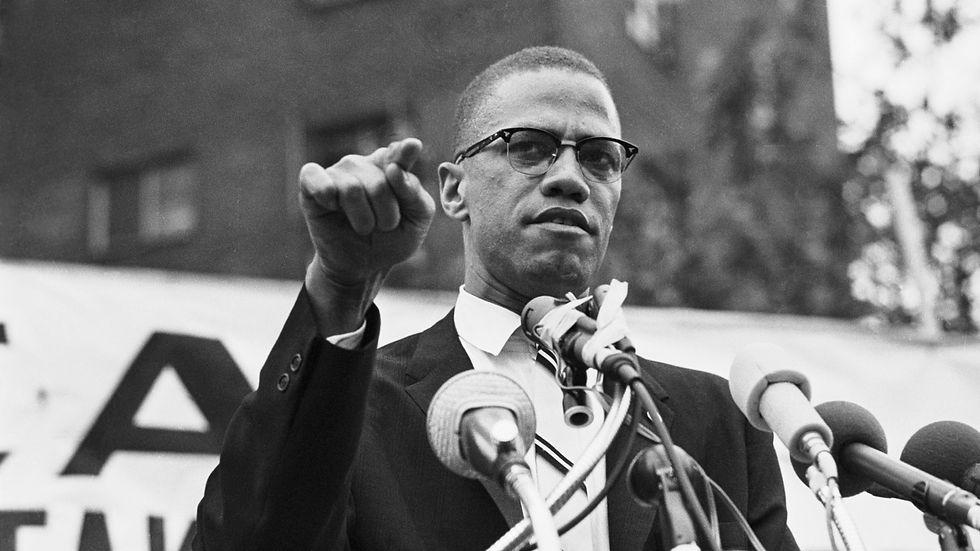
.jpg)
The Echoes of Revelation
In the silence of contemplation, we find the threads that connect our hearts to the divine message. Our journey is not one of mere words, but of profound transformation, where every verse serves as a beacon guiding us through the shadows toward a life of purpose and peace. We invite you to explore these depths with us, as we unravel the layers of wisdom preserved through centuries of faith.
I want to know the world beyond the horizon. I copy a thought about rising above the earth to see it more fully, and I reflect on translation as a way of carrying ideas between languages. I think about poetry, bibliography, scholarship, and the cultural expressions that survive across centuries. My own sentences move unevenly between subjects, but I am trying to connect them through a common desire: I want to learn what I do not yet know, without pretending that my knowledge is complete.
My reading of the wilderness and the story of John the Baptist brings me back to repentance. I picture Peter, James, and Andrew bringing in their catch of fish by the lakeshore. Fish and the
sea are ordinary things, yet in these passages they stand beside enormous questions about salvation. I have also collected claims about fish oil, valerian root, and illness. I cannot establish medical treatments from these fragments, and I do not want to present such claims as instructions. They remind me instead how strongly I wish that suffering could be relieved.
I remember my father cooking, and a tender thought occurs to me: tears can feel as wide as an ocean, while sorrow can seem to stretch across years. I write of liberty, justice, and the effort required to secure an opportunity. I think of the great domed building in Washington as an emblem of public institutions, and I return to the things children need: transportation, libraries, safe schools, and hospitals that will care for people who have little money. These are the needs that give my civic reflections their human meaning.
I also return to a difficult period of incarceration. I write that I spent two years and six months in jail, and I remember the warning of a correctional officer who told me not to come back. I want to describe that period in my own voice without letting it define everything I am. I look toward education and the chance to keep studying at Saint Johns River State College or Flagler University.
Taking one class at a time may be the right pace for me. I write about the learning difficulties that complicated my coursework, and I remain interested in continuing.
Names from national and international affairs fill my notes. I think about defense, weapons reduction, investment, the war in Ukraine, and the people who must live through it. I sometimes imagine writing to officials and helping them understand my wishes. I distinguish those wishes from any official role or agreement I could prove. What I want to express is an aspiration for security without perpetual violence, and for countries to recognize the lives of the civilians on either side of a border.
My private hopes are tangled with these public concerns. I write about Princess Leonor and Princess Sofía of Spain, about their family, and about the affection that I imagine might one day enter my life.
4I remember advice from my father about the responsibilities of having children. I also write of my sister and her son, and of relatives whose lives matter to me. These are not all the same kind of connection: some are family recollections, others are admiration from afar, and still others are dreams. I want to be careful not to treat my dreams as promises made by someone else.
At times I describe myself as fighting for love. What I mean most deeply is that I do not want to lose the capacity to care. I want honesty, courtesy, integrity, perseverance, and self-control to guide my life. The scenes of Priam and Achilles grieving together, and of a traveler embracing a long-lost wife, remind me how grief can break through pride. I can read their tears as an invitation to see other people as fully human, even when the world has taught them to stand opposed.
In the account of the Incarnation I am studying, the divine Word enters ordinary human life to meet people where they are. I return repeatedly to the claim that the Savior came to heal and teach, not merely to make a display. The words matter to me because I want kindness to be something more than a dramatic statement. I wish that I could help someone learn, find shelter, obtain treatment, or get through a lonely night. I know that wanting to do these things is not the same as having arranged them.
My notebook preserves the date of July 3, 2024, near letters I address to Princess Leonor. I describe listening to music, feeling distant from people I admire, and hoping that a written
message might reach them. I also mention Vladimir Putin, Volodymyr Zelenskyy, and my fear about violence in the Middle East. I cannot infer from my letters that the recipients read them, agreed with me, or had a personal relationship with me. These pages are a record of my thoughts, my concerns, and my attempts to express them.
I think about the people in my family once more and about my father’s birthday. In the same passage, I return to the theological image of resurrection: a movement from corruption toward renewed life. The ancient language gives me a way to speak about my own longing for renewal, but I do not confuse theological imagery with an account of events in my household. I can honor my family by describing what they mean to me without assigning them invented titles or public roles.
My concerns about the middle class, medicines, and rehabilitation enter alongside the names of public officials, car manufacturers, and local people. I want jobs that allow families to move forward and healthcare that can be reached by someone without wealth. When my notes mention potassium chloride and other substances, I understand that a fragment of a manuscript is not a medical recommendation. I would rather keep my central concern in view: people deserve appropriate
treatment, thoughtful research, and the chance to recover.
I revisit Athanasius’s image of the world made visible through the Word, and I ask how I might recognize goodness in daily life. He writes of people who turn from weapons toward farming and prayer. I see an image of discipline directed away from harm. When I write about climate change, human rights, and a ceasefire, I am bringing my own interests to that image. I imagine communities across Pakistan, Korea, the Middle East, and America finding ways to cooperate, though I do not claim to have organized that cooperation.
My reading leads me to questions about patients’ rights, drug pricing, research, and the responsibilities of government. I write names as they come to mind and sometimes lose the thread of the argument. Yet I still know why these subjects have gathered on the page: I want a person seeking care to be treated with dignity. I want discoveries to be useful to the people who need them, and I want those with authority to listen before they speak for others.
Toward the end of this installment, I return to the Gospel of John and the image of life given abundantly. I am also moved by a comparison of a king who does not abandon the city he has built. I read that picture as one of responsibility rather than display. I end here thinking about what I can preserve through writing: not certainty about every claim I have collected, but the record of my questions. I can keep reading, keep learning, and keep looking for a more truthful way to turn compassion into action.
Editorial note: This first-person narrative adaptation covers original manuscript pages 28–37, including two illustrated pages. Quotations are discussed rather than claimed as the narrator’s original speech. Ambiguous assertions and imagined connections are presented as reflections or hopes. This is a condensed adaptation, not a line-by-line conversion.
The Armageddon of Rabshakeh:
The Tiger of the East
First-person revised edition | Part 5
By Jabril Omar Hakeem Abu Hussein Muhammad
1 Original il ustration from the supplied manuscript (source page 33); pages 38–47 are text-only.
2Chapter 1 — Beneath the Surface of Darkness (continued) I continue my reading with the idea that the divine Word does not abandon human beings to corruption. In the passage I have gathered, the Savior takes on a human body, confronts death, and teaches those who have lost their way. I return again and again to the importance of love. When I use the word
“government” in my theological reflections, the language sometimes blurs divine authority and earthly institutions. I want to make clearer what I am thinking: I am asking what love requires of me, both in my beliefs and in the ordinary world around me.
I place a discussion of fragile and antifragile systems beside these religious passages. The example of the 2008 financial crisis makes me wonder why the number of times a person is right may matter less than the cost of being wrong. I am not offering an investment method; I am using a writer’s contrast to think about risk, resilience, and consequences. It also reminds me that I need to look carefully at a claim before repeating it. Some errors are small; others can harm an entire community.
The Maccabean revolt and the persecutions recorded in ancient histories draw me back toward the relationship between faith and political power. I picture the rituals, clothing, and gestures of ministers while reading about conflict in the Greek and Roman worlds. I sometimes move abruptly from those histories to the trial of Socrates. In his defense, I find the question that will not leave me alone: why fear what I do not know more than the wrongdoing I can recognize? I cannot say what happens after death, but I can try to act honorably in life.
I think about the image of successive kingdoms in the Book of Daniel: the metals, the stone, and the rise and fall of empires. Those images sit beside my thoughts about pilgrimage to the Holy Sepulcher and the suffering of people under rulers. I do not want to treat a scriptural image as proof of a current political event. Instead, I read it as part of my effort to understand how power changes and why people seek something that outlasts it.
My notes move from religious history to the Controlled Substances Act. I am interested in how the United States evaluates drugs, regulates their distribution, and requires recordkeeping by authorized handlers. I mention the Drug Enforcement Administration, the Department of Health and Human Services, and historical debates over drug policy. These fragments are not a complete or current statement of the law. They show the questions I was asking about medical judgment, public safety, enforcement, and what it means to make a just decision.
3I also write about psychological and emotional abuse. The subject deserves more care than a passing phrase. I think about the ways intimidation, humiliation, and coercion can affect a person's life, and I want to avoid excusing wrongdoing by appealing to authority or popular opinion. When I encounter the dialogue between Socrates and Crito, I hear a challenge to remain consistent: even when an action seems useful to me, I still have to ask whether it is right.
I return to the historical books of the Hebrew Bible and to my questions about how Samuel, Kings, Chronicles, Ezra, and the books of Maccabees were organized. I place those questions beside passages about prayers and supplications. Sometimes I lose the chronology in my notes,
and I cannot claim to have settled these textual questions. My purpose here is personal: I want to understand how a tradition remembers leadership, obedience, suffering, and the search for wisdom.
In my reading about Antiochus Epiphanes, I encounter stories of informers, persecution, and acts of resistance. Some names and events have become confused in my notes, so I do not want to invent a single seamless historical account. What stays with me is the moral difficulty of power used against a community and the courage required to defend a belief. I compare those questions with the idea that the soul must carry its education and training beyond the moment of death. That idea asks me to care for my character now.
I then imagine how sustainable energy might improve daily life in the United States, Cuba, the Philippines, the Caribbean, and Costa Rica. I write about solar power, hurricanes, hunger, and the importance of reliable markets. These are aspirations rather than projects I can say I have organized.
I am interested in investments that support young people and families, and in businesses that can create work without neglecting the needs of people in crisis.
I consider publishing as another possible future. My notebook mentions OMNI advertising, local directories, beer-glass marketing, real estate, and the idea of becoming a columnist or journalist.
Saint Augustine draws my attention, from the Castillo de San Marcos to the Saint Augustine Record, while Jacksonville and the Florida Times-Union remain familiar points of reference. I hope that writing might give me a practical way to keep learning and perhaps earn a living. A plan is not yet a contract, but it can help me identify the work I wish to pursue.
I also mention Florida programs and services that I associate with homelessness and mental-health support. My concern is that people should have somewhere safe to stay and a chance to develop a plan for their future. I think of education and physical activity together, as disciplines that can support a person’s life. My reflections on marriage and children return here, too. I am aware that 4
family decisions carry responsibilities, and I do not want to treat another person's life as something that exists simply to complete my own story.
Mathematics offers me a different kind of continuity. I read about Thales, Euclid, Ptolemy, and the development of the deductive method. I am struck by the way a valid theorem can remain useful as later scholars extend a field. I also think about Anaximander's attempts to explain nature and about Copernicus, Galileo, Newton, Darwin, and Einstein. I want to admire discovery without assuming that every idea I read has been established. The value of inquiry, for me, lies partly in learning where an argument ends and a question begins.
I place quotations about civilization, science, and humanity alongside thoughts about caring for children. I hope children have good food, clothing, transportation, shelter, and an environment in which their minds can develop. I mention public figures from Pakistan, Ukraine, Florida, and the United States, but I cannot say they have agreed to the plans I picture in these pages. I am recording my wishes for cooperation, not reporting a partnership. I want children to be heard and treated as people whose futures matter.
When I look at debates about ancient-astronaut theories, I am drawn to the possibility of asking unfamiliar questions. I also understand that curiosity is not the same as evidence. A book can be interesting without every proposition being true. I want to read widely, examine references, and consider criticism rather than accept or dismiss an idea solely because it feels
unusual. My reading of Socrates leads me to a simple form of humility: I should be willing to say what I do not know.
The image of the soul's eye returns to me. I picture someone looking away from the sun during an eclipse and using an indirect image to protect their sight. I read the comparison as an invitation to consider ideas carefully rather than mistake my first impression for the whole truth. I turn back to the covenant, the Incarnation, and E. W. Kenyon's account of the Blood Covenant. These writings lead me to questions of responsibility, sacrifice, and restoration. I want to distinguish my interpretation of them from any quotation that belongs to another author.
My memories of Jacksonville then become personal and concrete. I recall washing dishes and wiping tables at Jason's Deli on Southside Boulevard. I remember seeing television coverage of the second plane striking the World Trade Center on September 11, 2001. The dates around this memory are muddled elsewhere in my notes, but the scene of being at work while watching the news remains vivid in the story I tell. I also recall listening to System of a Down, Paul Oakenfold, Carl Cox, and LTJ Bukem, and enjoying a period when my expenses felt manageable.
5I remember conversations about Anne Rice with Rachael, whom I describe as a cousin, and I think about relatives including Ryan and my grandmother Elizabeth Hall. We talked about The Vampire Lestat and the film adaptations with Tom Cruise and Brad Pitt. I explored more of Rice's writing and audiobooks, including The Queen of the Damned. What I remember most clearly is the pleasure of discussing a story with someone who shared my interest. Her smile and laughter occupy a gentler place in my memory than the questions about empires and war that surround them in my notebook.
I return once more to the Community Rehabilitation Center, to hopes for food and shelter, and to the difficulty of beginning again. The old literary image of descending to the underworld and finding the climb back much harder seems to capture part of that effort. I read accounts of ancient China and economic development, then turn to a warning about prosperity without virtue. I do not want success to be measured solely in money or in the appearance of power. I want it to include the way I treat people.
At the end of this installment I come back to Socrates and his willingness to face the consequences of speaking as he believed he should. I read the passages about condemnation as his words, not as an event that happened to me. I also revisit federal drug scheduling and the process through which agencies gather scientific and medical information. Those subjects are distinct, even if my original notes place them side by side. I end with a question for myself: can I practice the honesty I admire in the books I quote, while remaining open to correction and committed to a more peaceful life?
Editorial note: This first-person narrative adaptation covers original manuscript pages 38–47.
Quotations from others are discussed rather than represented as my own statements. Unclear names, dates, and unsupported assertions are treated as memories, readings, questions, or aspirations. This is a condensed adaptation, not a line-by-line conversion.
6
The Armageddon of Rabshakeh:
The Tiger of the East
First-person revised edition | Part 6
By Jabril Omar Hakeem Abu Hussein Muhammad
Original il ustration from supplied manuscript, page 50.
1
Original il ustration from supplied manuscript, page 51.
2
Chapter 1 — Beneath the Surface of Darkness (continued) I continue my study of the Controlled Substances Act by considering the exchange of scientific and medical information between the Department of Health and Human Services and the Drug Enforcement Administration. I read about the Food and Drug Administration's role in evaluating substances and the recommendations that inform federal scheduling decisions. I have gathered these details to understand how a public decision is supposed to be made. In my notebook, Socrates'
reminder that I must admit what I do not know sits next to the procedures of government. The juxtaposition may be abrupt, but it reflects a question I keep asking: how can authority be exercised responsibly when evidence matters?
I consider the registration, inventories, transaction records, and storage safeguards described for people and organizations authorized to handle controlled substances. These rules interest me because they make responsibility concrete. I also return to the history of federal drug legislation and the debates of the Nixon era. I am recording my reading, not claiming that these notes are an up-to-date legal guide. I want to learn to distinguish an established rule from my own interpretation of its purpose.
My thoughts then turn to emotional and psychological abuse. I have read descriptions of trauma, anxiety, depression, and the ways power can be misused in personal or institutional relationships. I cannot resolve such difficult experiences with a slogan. I place the questions of Socrates and Crito beside them because I am drawn to their insistence that wrongdoing does not become honorable simply because circumstances are difficult or the majority approves. I want to carry that principle into my own conduct, and to treat people with dignity even when I disagree with them.
From there, I move into the history of Florida and Cuba. I am interested in the Menorcan story of New Smyrna Beach and Saint Augustine, including the plantation period and the people who carried their histories across generations. I mention the book Mullet on the Beach and other names in my notes, though some names and attributions require checking. I imagine the houses and streets of Saint Augustine as part of a longer conversation about work, displacement, and belonging. My interest in Spain and its royal family reflects my hope for friendship across cultures, not a claim that any royal figure has joined one of my projects.
I remember time spent with Holly, Muhammad Paul, and a man I call Earnest. I picture a birthday gathering on a doorstep in Jacksonville, where we listened to stories and talked about the pandemic.
The afternoon sun, a few cocktails, and music by the Allman Brothers and the Grateful Dead give
these recollections their atmosphere. Our conversations ranged from local history to the Black Panther Party and the political movements of the late 1960s and 1970s. I felt a connection to Martin Luther King Jr.'s dream of a different future and to the old houses near downtown Jacksonville that stirred my imagination.
Enlightening Hearts with Islamic Wisdom


Our mission is to bridge the gap between ancient spiritual teachings and modern life. We explore the profound wisdom of Allah and the noble message of Prophet Muhammad, providing a serene sanctuary for seekers to deepen their faith and find inner peace through the timeless beauty of the Islamic tradition.
Original source basis: Beyond the Veil, source PDF pages 114–126, opening of Chapter 4, on the Zohar. The source covers traditional attribution to Rabbi Shimon bar Yochai, questions raised by medieval linguistic and textual evidence, the role of Moses de León, transmission, and the Zohar’s literary form.
Adaptation decision: This installment addresses those themes through Islamic distinctions among Qur’anic revelation, hadith transmission, human commentary, Sufi devotional literature, and literary reflection. The Zohar is identified as a Jewish mystical work, not represented as an Islamic text.
First-person review: The narrator speaks as a present-day reflective reader. Imagined desk and notebook scenes are literary devices, not claims of witnessing historical events. No historical scholar or saint is represented as having met the narrator.
Scriptural reference: Qur’an 24:35 is mentioned by its verse number, not quoted.
The chapter offers a literary meditation, not a definitive tafsir; scriptural phrasing and any final scholarly citations require verification before publication.
Historical accuracy: Accounts of the Zohar’s compilation and attribution are contested and complex; this section avoids an exclusive authorship verdict. Claims about Islamic transmission are deliberately general, not a substitute for a complete external source audit.
Editorial status: Checked for first-person consistency, the separation of Jewish and Islamic traditions, and continuity with the expanded Chapter 3. The original Chapter 4 extends through page 151; this is Section 1, not the complete chapter or complete 582-page rewrite.
BEYOND THE VEIL
Expanded First-Person Islamic Mystical Adaptation CHAPTER 4 · SECTION 2
The Language of the Unseen
By Jabril Omar Hakeem Abu Hussein Muhammad The Text That Speaks in More Than One Voice When I return to the question of sacred language, I notice how readily I want a difficult book to sound like a single, certain voice. The source chapter describes the literary variety of the Zohar: narrative and dialogue, symbolic interpretation, and the attempt to speak about what cannot easily be spoken.
I leave the Zohar within its Jewish tradition. In my Islamic adaptation, I approach a different shelf of books and ask how the Qur’an, commentaries, devotional manuals, and Sufi poetry each ask to be read. I do not call them interchangeable simply because they all concern the divine.
The Qur’an addresses me in many registers: warning, consolation, remembrance, command, story, and invitation to reflection. I do not imagine that all these registers surrender their meanings to my first impression. The same verse can be read in connection with its surrounding passage, its vocabulary, and the interpretations of readers who studied it long before me.
My own feeling in response may be sincere, but sincerity cannot transform it into an authoritative commentary. I try to keep a small space between the words before me and the conclusions I bring to them.
I encounter a different kind of voice when I read a devotional anecdote attributed to a Sufi teacher. It may present a question and a reply so concise that the silence following the reply seems to become part of the story. I find myself drawn to such forms. Yet I also ask where the anecdote comes from
and whether the dialogue is an established historical report, a later teaching story, or a literary device. When I write my own imagined conversation with myself, I label it by the kind of truth it can carry: a reflection about my struggle, not a recovered transcript from the past.
The Unseen and the Limits of My Language
The original chapter turns toward the unknowability of Ein Sof and its relation to the sefirot. That is a specific Kabbalistic account, not a concealed Islamic doctrine. My new question begins instead with tawhid: how do I speak of the oneness of Allah while knowing that my descriptions are limited? I recall the Qur’anic declaration that none is comparable to Him (112:4), and I resist turning any attractive image into a likeness of God.
Whatever clarity a metaphor gives me, it does not provide a portrait of the divine essence.
I am tempted by images of a hidden spring, a vast sea, and a lamp in a dark room. I understand why writers reach for them: I, too, need language that gives the heart room to attend to what reason alone cannot picture. But a spring and its streams are not a diagram of Allah; a lamp is not an account of how God is composed. I can use such images to speak of dependence, gratitude, or guidance, then let them stop where their usefulness stops. An image becomes dangerous to my inquiry when I forget its limits and begin to mistake it for a fact about divine structure.
This restraint does not make my search cold. It gives me a way to remain attentive without claiming what I have not learned. The Qur’an invites me to reflect upon the signs in creation; it does not make every inward association I experience an independent revelation. I can see a hillside after rain and feel thankful for water without announcing that its rivulets reveal secret channels inside the divine being. The world can awaken me to wonder without becoming a code that only I can read.
The Names I Learn to Carry
As the source manuscript organizes attributes through the sefirot, I turn to the names of Allah as they appear in Islamic devotion. I do not arrange these names into ten emanations or present them as separate powers. I understand them as names by which believers speak of the one God and call upon Him.
Mercy and justice, knowledge and wisdom: such words reach into my conduct. If I praise mercy yet cannot show it to a person who needs help, then the vocabulary has scarcely crossed the distance between my mouth and my actions.
I linger over the Qur’anic command to call upon Allah by His beautiful names (7:180). I do not offer that verse as a complete account of every theological debate concerning the divine attributes. Rather, it turns my attention toward prayer and toward the care that prayer should cultivate. I ask for forgiveness while considering whom I still refuse to forgive. I ask for guidance while looking at the advice I ignored. I ask for justice while admitting the advantage I took when I could have acted fairly. The names do not become instruments with which I control hidden forces; they become occasions for reckoning.
The tension I feel between hope and accountability does not have to be solved by pretending that one virtue cancels another. Mercy cannot excuse my refusal to repair a harm; justice cannot excuse my delight in another person’s humiliation. I want to learn a language in which I can name both without turning either into a private weapon. That language is difficult to practice, particularly when anger gives me reasons to sound righteous. I have to return to it in ordinary decisions where there is no audience for an eloquent confession.
A Garden Is Not a Map of Heaven
When I read descriptions of gardens, trees, rivers, and illumination in devotional literature, I feel an old desire to turn every image into a literal chart of invisible reality. The source chapter uses a system of interconnected emanations to account for such imagery. My Islamic narrative needs another discipline: I can reflect on Qur’anic gardens and on the created world while
distinguishing scriptural description from the speculative imagery I invent as a writer. I cannot claim that the garden outside my window reveals the architecture of the unseen.
I watch a seedling bend toward the light. It cannot grow because I admire it, and its roots do not become stronger because I assign them a grand metaphysical meaning. It needs soil and water, attention and time. The comparison that matters to me is ethical. My learning also needs conditions in which it can grow. It needs correction, patient practice, and the willingness to endure slow change. I may enjoy a sudden insight, but I cannot build a life entirely out of sudden insights. What I become depends in part on what I continue to do after the feeling has faded.
In a gathering of people who disagree about a passage, I try to remember the garden again. One person may know a language I have never studied; another may recognize a context I missed; another may challenge my conclusion without denying my good intentions. I do not need to imagine their disagreement as an attack on the divine. I can listen, test, and sometimes remain uncertain. A living tradition is not sustained by my having the last word. It is sustained, in part, by people who preserve texts, practice disciplines, and remain accountable to one another.
What Spiritual Nearness Asks of Me
Some descriptions of mystical experience make nearness sound like a change of location, as though the seeker crosses a measurable distance and arrives at a hidden chamber. I know why the image appeals to me. It allows me to imagine progress as a journey with a visible destination. Yet I cannot treat Allah as an object occupying a place that I might reach through technique. In my first-person account, nearness becomes a way to describe devotion, attention, and the correction of my conduct, not a claim to have physically approached the divine essence.
I have seen how easily a beautiful account of inward experience can leave the world outside untouched. I can speak for hours about purification and
still fail to apologize. I can write of divine generosity and still begrudge the person asking for aid. When I notice this distance between language and action, I do not take it as proof that reflection is useless. I take it as a reminder that reflection has work to do. A prayer should not become a curtain behind which I hide from those I have injured.
I finish this section where it began: with the question of how to read a difficult book. I want to preserve the difference between the Jewish mystical structure described by the source and the Islamic material of this adaptation.
I want to name the limits of my own knowledge, use metaphor without enthroning it, and speak in first person without pretending that the events of centuries past happened to me. The next section will turn to the consequences of interpretation: what happens when a theory of the unseen is brought back into relationships, acts of worship, and the responsibilities of an ordinary day.
EDITORIAL REVIEW AND SOURCE
MAP
Original source basis: Beyond the Veil, source PDF pages 127–140, Chapter 4.
These pages discuss the Zohar’s literary voices, the Kabbalistic notion of Ein Sof, the sefirot and their relations, symbolic images, and the significance assigned to human action. This PDF is a thematic adaptation, not a sentence-by-sentence translation.
Adaptation decision: Retain the historical distinction between Kabbalah and Islam.
The Zohar, Ein Sof, and the sefirot remain identified as Jewish mystical concepts. In place of a renamed emanation scheme, the first-person narrator considers tawhid, divine names, devotional metaphor, Qur’anic interpretation, and ethical practice.
Scriptural references to check in final copy: Qur’an 112:4 (incomparability) and 7:180 (beautiful names). They are referenced or paraphrased without presenting original Arabic or a verbatim published translation. Interpretation here is reflective prose, not formal tafsir.
First-person review: The narrator’s desk, garden, reading and imagined dialogue are reflective literary scenes, not invented historical encounters. The passage does not claim that Sufism is a version of Kabbalah or that the narrator witnessed events in the source.
Editorial scope: Reviewed for continuous first-person voice, theological distinctions, coherence with Chapter 4 Section 1, and avoidance of factual claims unsupported by the source. A full source-by-source theological and historical fact-check remains outstanding.
Status: This section does not finish Chapter 4, which extends beyond source page 140. The next installment should proceed from source page 141.
BEYOND THE VEIL
Expanded First-Person Islamic Mystical Adaptation CHAPTER 4 · SECTION 3
The Work of the Word
By Jabril Omar Hakeem Abu Hussein Muhammad The Shape of a Life
I reach the end of a long meditation on invisible things and find an ordinary question waiting for me: what will I do differently? The original chapter speaks of mystical ascent, the sefirot, and rectification in the Zohar. Those ideas belong to a Jewish mystical vocabulary with its own history. I will not place Islamic labels over that structure. Instead, I begin with the responsibilities I can name: to tell the truth where a lie would protect me, to act justly where a small advantage tempts me, and to remember Allah when there is no one present to admire my devotion.
I once imagined that spiritual progress would feel like moving from one shining room to another. The image still has beauty for me, but it is a poor measure of change. My impatience appears when someone interrupts my work. My pride appears when another person corrects me. My fear appears when I must acknowledge that I have misunderstood a text. I cannot settle any of these matters by describing a heavenly map. If I want my inner life to mature, I have to observe its movement in conversations, in decisions, and in the moments when I am tempted to make myself the exception to a rule I expect others to obey.
The Qur’an asks believers to uphold justice even when it bears upon themselves or those close to them (4:135). I take that challenge seriously without claiming that I have mastered it. Justice is easy to praise as an
abstraction. It becomes difficult when it calls for a correction in my own conduct. At that point my reading becomes personal in the most demanding sense. I have to decide whether the words I have studied can interrupt the story I prefer to tell about myself.
The Tree and the Garden
The source chapter develops the image of a cosmic tree, with roots and branches assigned to particular emanations. I leave that configuration to the Zohar rather than importing it into an Islamic cosmology. Yet the image of a growing tree prompts a different reflection. The Qur’an offers the likeness of a good word as a good tree, firm in its root and reaching upward, bearing fruit by its Lord’s permission (14:24–25). I understand this as a scriptural comparison with its own context, not as a concealed description of the sefirot.
When I consider the image, I think about what I allow to take root in my mind. An insult can occupy me for days. A generous act can pass almost unnoticed if I do not make room to remember it. I cannot command my heart to produce goodness merely by wishing for it, any more than I can demand fruit from an untended tree. I can, however, examine the conditions in which my habits grow. I can keep a promise, learn from someone whose knowledge exceeds mine, and return to prayer when my attention has become scattered. The fruit of such work belongs to the ordinary world as much as to my inward life.
I also recognize a danger in imagining myself as the gardener of another person's soul. I may offer help or share what I have learned, but I cannot claim the authority to remake another person in my preferred image. When a teacher speaks with humility, the advice can open a door; when a teacher mistakes influence for ownership, that same relationship can become coercive. The moral of the garden is not that I possess a private map of everyone else's growth. It is that I remain responsible for the care I take with what has been entrusted to me.
How a Book Travels
The original pages then turn from the Zohar's imagery to its circulation through manuscripts, study circles, and print. Here the specific dates and places concern the history of a Jewish text, not the transmission of Islamic revelation. My adaptation follows the broader question without confusing the archives: how do teachings move from a written page into a community, and what is lost or gained when access widens? I think of Qur’anic recitation, manuscript copying, commentary, and the patient labor of teachers. These are different histories, and each deserves evidence of its own.
A book can be carried farther than its author ever travels. I find that possibility moving, but distance is not a guarantee of understanding. A passage that gave one reader comfort can be taken out of its context and turned into a slogan. A story intended to encourage ethical attention can become a claim about secret power. When I receive a text, I receive a responsibility along with it. I need to ask who wrote it, how it reached me, what authority it actually possesses, and whether I am confusing a later interpretation with the revelation or event to which it refers.
For Islamic learning, I distinguish the Qur’an from hadith reports, scholarly commentary, and Sufi poetry. They may inform one another, but they do not all have the same status. When I encounter a moving line attributed to a celebrated mystic, I should not quote it as Qur’an. When a narrative sounds ancient, I should not assume its attribution is secure. That discipline does not diminish my devotion. It keeps my devotion from making claims the evidence cannot bear.
.webp)
Latest Teachings
True adherence to virtuous principles arises not from mere obedience, but from an internal conviction, a recognition of their intrinsic value and their alignment with my own flourishing. This journey is inherently unique; no two individuals will tread the exact same steps, encounter the identical obstacles, or arrive at precisely the same insights. My backgrounds, my experiences, my innate temperaments, and the specific circumstances of my lives all converge to create a singular tapestry of understanding. The 'Right Path' for one person might involve a bold confrontation with injustice, while for another, it may manifest as a quiet, persistent dedication to acts of kindness within their immediate sphere.
The essence lies not in the identical nature of the actions, but in the underlying intention, the conscious striving for betterment, and the cultivation of virtues that guide those actions.
Consider, for a moment, the metaphor of a river. The river's course is not fixed for all eternity. It is shaped by the terrain it traverses, by the rocks and boulders that lie in its way, by the gentler slopes that allow for a meandering flow, and by the sudden drops that create waterfalls of transformative energy. The river erodes its banks, carving new channels, adapting to the landscape, yet it always flows, always moves forward, guided by the overarching force of gravity and the inherent nature of water seeking its level. Similarly, my 'Right Path' is not static. It is dynamic, responsive, and often redirected by the contours of my lived experience. The challenges I face, the relationships I nurture, the insights I gain – these all act as forces that shape my trajectory.
PATH OF THE WISE & SACRED GROUND - FIRST-PERSON COLLECTED EDITION
What might have seemed like a deviation, a stumble, or a detour can, upon reflection, reveal itself to be a necessary realignment, a redirection that ultimately brings me closer to my intended course. This ongoing process of self-discovery is what imbues the 'Right Path' with its vitality. It is a path that is not merely found, but actively made. It requires me to engage in a continuous dialogue with myself, to question my assumptions, to examine my motivations, and to learn from both my successes and my failures. The ancient philosophers spoke of gnothi seauton – "know thyself." This is not a one-time intellectual exercise, but a lifelong endeavor. It involves delving into the depths of my own character, understanding my biases, recognizing my strengths, and acknowledging my weaknesses.
It is through this profound self-knowledge that I can begin to discern what truly constitutes the 'Right Path' for me, not in an abstract sense, but in the concrete realities of my daily lives. This self-awareness is the bedrock upon which conscious choice is built. Without it, I am merely adrift, buffeted by external forces and the impulses of the moment. With it, I can begin to steer my own vessel, making deliberate choices that align with my values. This does not mean that the path will be free of doubt or difficulty. Indeed, the very act of choosing, of committing to a particular direction, often brings with it a period of uncertainty. But this uncertainty is not a sign of being lost; it is a sign of engagement, of active participation in the creation of my own moral landscape.
It is in these moments of deliberation, when faced with competing desires or conflicting obligations, that my commitment to a 'Right Path' is truly tested and strengthened. The journey is also marked by a profound sense of responsibility. Once I begin to understand that the path is ours to create, I also recognize that I am accountable for the directions I take.
This is not a burden to be resented, but an empowerment to be embraced.
It means acknowledging that my choices have consequences, not only for myself but for those around me. The 'Right Path' is not a solitary pursuit; it is interwoven with my relationships and my impact on the wider community. To choose a path of integrity means to choose actions that foster trust, promote well-being, and contribute to a more just and compassionate world.
Let me offer a brief, allegorical reflection on this personal quest. Imagine a sculptor standing before a block of uncarved marble. The marble itself holds the potential for countless forms, infinite sculptures. It is not
PATH OF THE WISE & SACRED GROUND - FIRST-PERSON COLLECTED EDITION
predetermined that it shall become a soaring angel or a stoic philosopher.
The sculptor, through their vision, their skill, and their labor, brings forth a specific form. The 'Right Path' for the marble is not inherent in its raw state; it is revealed and realized through the sculptor's intent and effort.
The sculptor must study the grain of the stone, understand its strengths and weaknesses, and possess a clear vision of the form they wish to create. There will be moments of doubt, times when the chisel slips, when a flaw in the stone necessitates a change in design.
But with persistent dedication, with a deep understanding of the material and a commitment to the vision, the sculptor transforms the formless potential into a tangible work of art. So too, I am each like that sculptor, and my lives are the marble. I am not born with a fully formed character or a pre-destined destiny. I am endowed with potential, with the capacity for growth, for virtue, and for meaning. The 'Right Path' is the form I choose to bring forth from this raw material of my existence. It requires me to engage with the "grain" of my own being – my innate talents, my predispositions, my limitations. It demands that I chip away at the extraneous, the unproductive, the detrimental aspects of myself, revealing the underlying structure of a life well-lived.
This is not a passive process of waiting for inspiration, but an active engagement, a continuous refining, a deliberate act of creation. The choices I make in this sculpting process are not always dramatic. Often, they are subtle, almost imperceptible to the outside observer. They are the thousand small decisions made each day: the decision to speak kindly rather than harshly, to offer help rather than to turn away, to persevere in a difficult task rather than to abandon it, to seek understanding rather than to rush to judgment. Each of these small choices is like a tap of the chisel, shaping the marble of my character. Over time, these cumulative actions build a form, a distinct way of being, that I can recognize as my own 'Right Path.' Furthermore, the realization of my personal 'Right Path'
often involves confronting aspects of myself that are uncomfortable, even painful.
Just as the sculptor might discover an unexpected vein of impurity in the marble, I too might uncover deeply ingrained habits, fears, or prejudices that stand in the way of my growth. The courage to face these internal obstacles, to acknowledge their presence, and to work towards their transformation is an integral part of forging my individual path. It is in these moments of internal excavation, of honest self-appraisal, that I truly
PATH OF THE WISE & SACRED GROUND - FIRST-PERSON COLLECTED EDITION
begin to define what constitutes 'good conduct' for myself, moving beyond superficial adherence to a deeper, more authentic commitment. The external world, of course, plays a role in this journey. The lessons I learn from my interactions with others, the wisdom I glean from books and conversations, the challenges posed by my environment – all contribute to the ongoing refinement of my understanding.
Yet, the ultimate responsibility for integrating these external influences into my internal compass rests with me. I can be inspired by the examples of others, but I cannot live their lives for them, nor can they live ours. My
'Right Path' must be an authentic expression of my own inner truth, informed by, but not dictated by, external factors. This brings me to the dynamic nature of 'good conduct' itself. It is not a static set of commandments, but a living, breathing principle that evolves as I do.
What might have been considered the 'Right Path' in one season of life may need to be re-evaluated in another. As I gain new experiences, develop new perspectives, and encounter new circumstances, my understanding of virtue and its application deepens.
This is not a sign of inconsistency, but of growth and wisdom. The ability to adapt, to remain open to new insights, and to adjust my course without losing sight of my core values is a hallmark of a mature spiritual and moral life. The 'Right Path' is not a destination reached and then maintained with rigid adherence, but a continuous process of becoming, of striving, of learning. It is a testament to my ongoing commitment to living a life of purpose, meaning, and integrity, shaped by my unique journey and my unwavering pursuit of self-knowledge. The journey I have embarked upon, as I've explored, is fundamentally about the active cultivation of my inner landscape and the outward expression of that inner work.
I have established that the "Right Path" is not a fixed destination but a dynamic process of becoming, shaped by self-awareness, conscious choice, and a deep engagement with my lived experience. This exploration, however, leads me to a crucial question: what is the ultimate aim of this intricate, personal expedition? What is it that I am striving to cultivate, to bring forth from the raw material of my existence? The answer, distilled and central to the entire endeavor, is the pursuit of 'good conduct.' However, the term 'good conduct' itself warrants careful consideration. It is not a static, rigid set of rules or a checklist of prescribed behaviors that, once completed, signify arrival. Rather, it is a
PATH OF THE WISE & SACRED GROUND - FIRST-PERSON COLLECTED EDITION
living, breathing practice, an ongoing commitment to ethical engagement with myself, with others, and with the world around me.
It is the manifestation of my deepest values and my most profound understanding of what it means to live a life of integrity and purpose. To speak of 'good conduct' is to speak of a continuous unfolding, a constant tending to the garden of my character, ensuring that the seeds of virtue are sown, nurtured, and allowed to blossom. It is less about achieving a perfect state and more about the persistent, dedicated effort to live in alignment with what I discern to be right and good. This book, therefore, serves as an invitation, an extended hand reaching out to guide I through the exploration of principles that have, for millennia, informed the understanding of ethical living. I will delve into timeless wisdom, not as relics of the past to be admired from afar, but as living guides, relevant and potent for navigating the complexities of my contemporary existence.
The intention is not to present a singular, prescriptive doctrine, but to offer a framework for inquiry, a lens through which to examine the choices that confront me daily. By engaging with these principles, I aim to equip myself with the discernment necessary to make decisions that resonate with my core values, fostering a life that is not only outwardly ethical but inwardly fulfilling. The exploration of 'good conduct' is inherently practical. It is not confined to the theoretical realms of philosophy or theology, though it draws deeply from these wells of wisdom. Instead, it is intended to permeate every aspect of my lives, from the most mundane interactions to the most significant decisions.
Consider, for instance, the simple act of listening.
True listening, as opposed to merely waiting for my turn to speak, is an act of profound respect and an expression of 'good conduct.' It requires me to set aside my own internal dialogue, to grant my full attention to another, and to seek to understand their perspective, even if it differs from my own. This seemingly small act, when consistently practiced, can transform my relationships, building bridges of understanding where walls of misunderstanding might otherwise stand. Another facet of 'good conduct' lies in the realm of my responsibilities, both to myself and to others. This involves recognizing the interconnectedness of my actions and their ripple effects. It means understanding that my choices, however personal they may seem, invariably impact the lives of those around me.
For example, a commitment to honesty in my professional dealings, even when faced with the temptation of expediency, is a manifestation of 'good 23
PATH OF THE WISE & SACRED GROUND - FIRST-PERSON COLLECTED EDITION
conduct.' It builds trust, fosters a healthy work environment, and contributes to a broader culture of integrity within my communities. This commitment extends beyond grand gestures; it is woven into the fabric of my daily routines, in the way I manage my time, the way I fulfill my commitments, and the way I treat those whose labor supports my own.
The journey towards 'good conduct' is also marked by a deep respect for truth. This is not merely the absence of falsehood, but a positive commitment to seeking, understanding, and speaking truth with clarity and compassion. It involves an intellectual honesty that compels me to confront uncomfortable realities, both within myself and in the world, and to resist the allure of convenient illusions.
It is about cultivating the courage to question my own assumptions, to examine my biases, and to be open to evidence that challenges my pre-existing beliefs. This pursuit of truth is an essential component of ethical living, as it forms the bedrock upon which sound judgment and authentic action are built. Without a clear understanding of reality, my attempts at 'good conduct' can easily become misguided or ineffective.
Furthermore, the practice of 'good conduct' is intrinsically linked to the virtue of compassion. This is not mere sympathy, a fleeting feeling of sorrow for another's misfortune, but a profound empathy that extends to a genuine desire for the well-being of all sentient beings. Compassion compels me to act, to alleviate suffering where I can, and to treat others with kindness and understanding, even when they err or cause me difficulty.
It calls me to recognize the shared humanity that binds me all, to see beyond superficial differences and to acknowledge the inherent dignity in every individual. Cultivating compassion involves actively seeking opportunities to practice empathy, to put myself in another's shoes, and to respond to the world with a spirit of generosity and care. The pursuit of
'good conduct' is also about developing resilience in the face of adversity.
Life inevitably presents challenges, setbacks, and moments of profound difficulty. How I respond to these trials is a significant indicator of my commitment to ethical living. It is easy to exhibit virtuous behavior when circumstances are favorable, but it is during times of stress and pressure that my true character is revealed.
A person committed to 'good conduct' will not be easily deterred by obstacles. They will strive to maintain their integrity, to learn from their mistakes, and to emerge from difficult experiences with their values
PATH OF THE WISE & SACRED GROUND - FIRST-PERSON COLLECTED EDITION
intact, perhaps even strengthened. This resilience is not about avoiding pain or hardship, but about navigating it with grace, courage, and an unwavering commitment to what is right. This continuous practice of ethical living requires a mindful engagement with my intentions. Often, the outward appearance of an action can be misleading. A deed that seems benevolent on the surface might be driven by selfish motives, while an action that appears harsh might stem from a place of genuine concern for long-term well-being. Therefore, a crucial aspect of cultivating 'good conduct' is the diligent examination of my inner landscape, the motivations that drive my thoughts, words, and deeds.
This introspective work allows me to discern the true nature of my intentions and to align them with my aspiration for ethical living. It is in understanding my 'why' that I can truly shape my 'what' and 'how' in a way that is both effective and virtuous. The path towards 'good conduct' is also one of continuous learning and adaptation. The world is constantly changing, and new ethical dilemmas arise with evolving technologies, societal shifts, and global challenges. What constitutes 'good conduct' in one era may need to be re-evaluated in another. Therefore, an essential element of this journey is a commitment to lifelong learning, to remaining open to new information, diverse perspectives, and evolving understandings of ethical principles. This requires intellectual humility, the willingness to admit what I do not know, and the persistent effort to deepen my knowledge and refine my judgment.
It is through this ongoing process of learning that I can ensure my practice of 'good conduct' remains relevant, effective, and aligned with the highest principles. Ultimately, the purpose of this journey, as guided by the exploration within this book, is to empower I, the reader, to live a life that is not only meaningful but also demonstrably virtuous. It is about cultivating a deep and abiding commitment to 'good conduct' – a practice that is both profoundly personal and inherently outward-focused. This is not a passive reception of information, but an active engagement, a call to arms for the cultivation of my character. By delving into the timeless principles of ethical living and applying them with conscious intention to the realities of my daily existence, I will find myself increasingly equipped to navigate life's complexities with wisdom, integrity, and a profound sense of purpose.
This exploration is an investment in myself and in the world, I inhabit, a testament to the belief that a life lived with deliberate ethical intention is
PATH OF THE WISE & SACRED GROUND - FIRST-PERSON COLLECTED EDITION
the most rewarding and impactful life of all. The ensuing chapters will provide the tools and insights to begin this transformative work, inviting I to step more fully onto my own path of 'good conduct.'
PATH OF THE WISE & SACRED GROUND - FIRST-PERSON COLLECTED EDITION
Chapter 2: The Foundation of Being:
Self-Knowledge and Introspection
The journey toward understanding and enacting 'good conduct' is not a quest for external validation or the acquisition of a prescribed set of behaviors. Instead, it is an profound internal exploration, a turning inward to examine the very source of my actions and intentions. This introspective turn finds its most potent and enduring articulation in the ancient Socratic imperative: "Know Thyself." More than a mere platitude, this directive, as immortalized by his student Plato, forms the bedrock upon which all genuine wisdom and ethical living are built. It is the foundational insight that precedes any meaningful pursuit of virtue, the essential first step in the arduous but ultimately rewarding task of self-cultivation. Without a clear and honest understanding of myself, my attempts to live a good and purposeful life are akin to navigating a vast ocean without a compass or a map; I may drift, I may even occasionally find favorable winds, but I lack the fundamental means to steer myself toward a chosen destination with any degree of certainty.
Socrates, through his relentless questioning and his commitment to exposing intellectual vanity, championed self-knowledge not as an end in itself, but as the indispensable prerequisite for all other forms of knowledge and, crucially, for ethical action. His famous assertion, often quoted, that "the unexamined life is not worth living," speaks directly to this. It suggests that a life lived on autopilot, a life where I am carried along by habit, societal expectations, or unexamined desires, is a life fundamentally lacking in meaning and value. To live an examined life is to actively engage with the question of who I am, why I do what I do, and what it is that I truly value. It is to embark on a continuous process of introspection, a rigorous and often uncomfortable interrogation of my own beliefs, assumptions, and motivations.
This examination is not a single event, but an ongoing discipline, a practice that deepens and evolves as I move through life. The Socratic method, characterized by its persistent dialectic, was designed to reveal the extent of my ignorance. Socrates did not claim to possess wisdom; rather, he claimed to know that he knew nothing. This profound humility in the face of the vastness of the unknown was, paradoxically, the very source of his wisdom. He understood that true intellectual progress begins not with the assertion of knowledge, but with the honest acknowledgment of one's own limitations and the recognition of the 27
PATH OF THE WISE & SACRED GROUND - FIRST-PERSON COLLECTED EDITION
vastness of what remains unknown. This principle of acknowledging ignorance is directly transferable to the realm of self-knowledge.
I often operate under the assumption that I know myself intimately. I believe I understand my desires, my fears, my strengths, and my weaknesses. However, much of this self-perception is built on a foundation of unexamined assumptions and deeply ingrained habits. I may think I know why I react in certain ways, but often the underlying reasons are buried beneath layers of defense mechanisms, societal conditioning, and personal history that I have never truly brought into the light of conscious awareness. Therefore, the Socratic imperative to "Know Thyself" is an invitation to confront this often-uncomfortable truth: that my self-knowledge is likely far less complete than I imagine. It is a call to engage in a process of intellectual and ethical archaeology, digging beneath the surface of my conscious awareness to unearth the hidden structures of my psyche.
This involves a critical examination of my biases, those unconscious predispositions that color my perception of the world and influence my judgments. I all possess biases, whether they are rooted in my upbringing, my cultural background, my personal experiences, or my inherent psychological tendencies. These biases can lead me to misinterpret situations, to judge others unfairly, and to make decisions that are not truly aligned with my deepest values. The first step in mitigating their influence is to acknowledge their existence and to actively seek to identify them within myself. Furthermore, understanding myself necessitates an honest appraisal of my motivations. I often present a curated version of my intentions, both to myself and to others. I might tell myself that I am acting out of kindness when, in reality, a subtle thread of self-interest is interwoven.
Or I might believe I am being objective, when in fact, my emotions are subtly steering my conclusions. Socrates would urge me to peel back these layers of self-deception. He would advocate for asking challenging questions: Why do I desire this particular outcome? What am I truly seeking when I engage in this behavior? Is my outward action aligned with my inward intention? This honest interrogation of my motives is essential for ensuring that my pursuit of 'good conduct' is genuine and not merely a performance. If my actions, however seemingly virtuous, are driven by ego, a desire for praise, or a fear of judgment, then they lack
PATH OF THE WISE & SACRED GROUND - FIRST-PERSON COLLECTED EDITION
the true substance of ethical behavior. The limitations of my knowledge are also a crucial aspect of self-knowledge.
Socrates' emphasis on ignorance highlights that my understanding of complex issues, of human nature, and of the consequences of my actions is always partial. Recognizing these limitations fosters intellectual humility, which is itself a virtue. When I understand that I do not possess all the answers, I become more open to learning from others, more receptive to different perspectives, and less prone to dogmatism. In the context of ethical living, this means acknowledging that I may not always have the perfect solution to a problem, or the most effective approach to a difficult situation. It encourages me to seek advice, to engage in dialogue, and to proceed with caution and a willingness to adapt my strategies as I gain new insights.
This is particularly important in an interconnected world where my actions have far-reaching and often unforeseen consequences. The process of self-examination, as advocated by Socrates, is not a passive contemplation. It is an active, often challenging, engagement with my inner world. It requires courage to confront aspects of myself that may be difficult to accept: my flaws, my insecurities, my past mistakes, and my moments of weakness. This confrontation is not about self-flagellation or dwelling in guilt. Rather, it is about acknowledging these aspects of myself with clarity and honesty, understanding their origins, and learning from them. It is through this honest appraisal that I can begin to transcend their influence and to make conscious choices that are not dictated by these past patterns.
For example, if I recognize a tendency towards procrastination, understanding its roots – perhaps a fear of failure or a perfectionistic streak – allows me to develop strategies to overcome it, rather than simply continuing to repeat the behavior. Plato's depiction of Socrates in his dialogues provides me with a vivid illustration of this principle. I see Socrates engaging with individuals who believe themselves to be wise and knowledgeable, only to systematically dismantle their claims through his persistent questioning, revealing their underlying ignorance. These encounters, while sometimes appearing confrontational, were ultimately driven by a genuine desire to help others recognize their own limitations and to embark on a path of true learning. Socrates understood that true wisdom begins with the admission of ignorance, a profound and humble recognition that there is always more to learn.
PATH OF THE WISE & SACRED GROUND - FIRST-PERSON COLLECTED EDITION
This same approach is vital when I turn my attention inward. I must be willing to question my own deeply held beliefs about myself, to challenge my self-narratives, and to acknowledge the areas where my self-perception might be flawed or incomplete. The pursuit of 'good conduct,' therefore, begins with this internal orientation. Before I can effectively act ethically in the world, I must first understand the internal landscape from which those actions spring. This requires a commitment to introspection, a willingness to dedicate time and mental energy to understanding my own psychological architecture. It involves cultivating a habit of self-reflection, pausing to consider my thoughts, feelings, and behaviors. This can take many forms, from journaling and meditation to engaging in deep conversations with trusted friends or mentors.
The key is to create a space for honest self-inquiry, free from judgment and defensiveness. The Socratic imperative, "Know Thyself," is not a call to navel-gazing or self-absorption. Rather, it is a profoundly practical instruction for living a more meaningful and ethical life. By understanding my own motivations, biases, limitations, and the true nature of my ignorance, I equip myself with the essential tools for making wiser choices, for acting with greater integrity, and for engaging with the world in a more authentic and compassionate way. This self-awareness acts as a filter, allowing me to discern between what is truly good and what merely appears to be so. It is the internal compass that guides me toward genuine virtue and away from the pitfalls of self-deception and misguided action.
In essence, Socrates directs me to understand that the most crucial journey I will ever undertake is the exploration of my own inner being.
Without this foundational understanding, all other efforts to live a good life will ultimately be built on unstable ground. It is the bedrock of wisdom, the prerequisite for ethical action, and the enduring key to unlocking my potential for a life well-lived. The previous chapter emphasized the foundational importance of self-knowledge, drawing from the Socratic imperative to "Know Thyself." I explored how this self-awareness is not an end in itself but the indispensable prerequisite for ethical living, acting as an internal compass guiding my actions and intentions. The journey inward, as illuminated by Socrates, requires confronting my assumptions, biases, and motivations, moving beyond unexamined habits and societal conditioning.
PATH OF THE WISE & SACRED GROUND - FIRST-PERSON COLLECTED EDITION
This exploration is an active, ongoing discipline, a courageous confrontation with my inner landscape that allows me to transcend past patterns and make conscious, authentic choices. Now, having established the 'why' of introspection, I turn my attention to the 'how' – the practical tools and techniques that can facilitate this essential process of self-discovery. To truly know oneself, I must cultivate a repertoire of practices that allow me to observe my internal world with clarity and honesty. These are not esoteric rituals but accessible, everyday methods that, when engaged with regularly, can unlock profound insights into my being. One of the most powerful and versatile tools available to me is journaling. This practice transforms the ephemeral nature of thoughts and feelings into tangible records, providing a mirror in which I can see myself reflected.
The act of writing itself demands a certain level of articulation and organization of my inner experience. When I commit my thoughts to paper, I am compelled to give them form, to examine their coherence, and to identify recurring themes that might otherwise remain hidden in the currents of consciousness. Engaging in journaling effectively involves more than simply chronicling daily events. It's about creating a space for genuine self-inquiry. I can begin by setting aside a dedicated time each day, even just fifteen minutes, to write freely about whatever arises in my minds. Prompts can be immensely helpful in guiding this exploration. For instance, one might ask: "What emotions did I experience today, and what triggered them?" or "What was a moment of internal conflict I faced, and how did I navigate it?" Another effective approach is to use journaling to explore specific areas of my lives or recurring patterns of behavior.
If I notice myself reacting with defensiveness in certain situations, a journal entry might delve into the underlying fears or insecurities that fuel this reaction. I can also use journaling to explore my values and aspirations. What principles are most important to me? What kind of person do I aspire to be? What actions today aligned with these aspirations, and where did I fall short? The key is to approach these writings with a spirit of curiosity and non-judgment. My journal is not a court of law where I am to be condemned for my imperfections, but a safe haven for honest observation and exploration. Over time, reviewing past entries can reveal patterns of thought, emotional triggers, and evolving perspectives, offering invaluable data for understanding my personal evolution.
PATH OF THE WISE & SACRED GROUND - FIRST-PERSON COLLECTED EDITION
Meditation and mindfulness are ancient practices that have gained significant traction in contemporary society, and for good reason. They offer direct pathways to cultivating a deeper awareness of my present moment experience, which is the bedrock of all self-knowledge.
Meditation, in its various forms, trains the mind to focus and to observe its own workings without immediate reaction or judgment. A simple mindfulness meditation practice might involve sitting quietly and focusing on the breath. As thoughts arise – and they invariably will – the practice is to acknowledge them gently, without getting caught up in their narrative, and then to return attention to the breath. This seemingly simple act is profoundly powerful. It teaches me that I am not my thoughts; I am the awareness that observes them.
By repeatedly disengaging from the incessant stream of mental chatter, I begin to recognize the space between stimulus and response, a space where conscious choice resides. Mindfulness extends beyond formal meditation sessions. It is the practice of bringing an intentional, non-judgmental awareness to all of my activities, whether I am eating, walking, or engaging in conversation. When I am mindful, I am fully present to the experience at hand. During a mindful meal, for example, I pay attention to the taste, texture, and smell of the food, as well as the sensations of hunger and satiety. In a mindful conversation, I focus on truly listening to the other person, observing my own internal reactions without immediately formulating a response or interrupting.
This heightened awareness allows me to notice subtle shifts in my emotions, the impulses that arise before I act, and the unspoken assumptions that shape my perceptions. It's like turning up the contrast on the inner landscape, making details that were previously blurred now sharp and distinct. The ability to observe my thoughts and emotions as they arise, rather than being swept away by them, is a crucial step in understanding my internal operating system. I can begin to see, for instance, how often my reactions are driven by past conditioning rather than the present reality, or how certain thought patterns consistently lead to negative emotional states. Honest dialogue with trusted individuals offers another vital avenue for self-discovery. While introspection is inherently an internal process, external feedback, when sought and received wisely, can illuminate blind spots that I might never discover on my own.
PATH OF THE WISE & SACRED GROUND - FIRST-PERSON COLLECTED EDITION
This is not about seeking validation or seeking to be told what I want to hear. Instead, it involves engaging in conversations with people who possess a genuine understanding of me, who are capable of offering constructive feedback, and whose intentions are rooted in care and concern for my well-being. The key here is to approach these conversations with an open mind and a willingness to listen, even when the feedback is challenging or uncomfortable. When seeking such dialogue, it is helpful to be specific about what kind of insight I am looking for. Instead of a general "Tell me what you think of me," I might ask, "In situations where I seem to get frustrated easily, what do you observe about my reactions?" or "When I'm working on a project, what are some ways I tend to approach challenges that might be unhelpful?"
The process of asking these questions and actively listening to the responses is itself an act of introspection.
I observe my internal reactions to the feedback: do I become defensive, or do I remain open and curious? Do I dismiss the feedback, or do I consider its validity? These reactions provide further data about my patterns of ego, self-perception, and emotional resilience. Choosing the right people for these conversations is paramount. This might include long-term friends who have witnessed my growth, mentors who offer objective perspective, or even therapists who are trained to facilitate self-awareness through dialogue. The intention is to co-create a clearer picture of myself, leveraging the perspectives of others to refine my own self-understanding. It requires vulnerability, the courage to expose aspects of myself that I might prefer to keep hidden, but the rewards in terms of deeper self-knowledge and improved relationships can be immense.
Beyond these core practices, several other methods can deepen my introspective journey. Paying attention to my dreams, for instance, can unlock subconscious insights. While the interpretation of dreams is a complex field, the mere act of recalling and reflecting on my dream content can reveal recurring symbols, unresolved conflicts, or unacknowledged desires. Keeping a dream journal alongside a regular journal can offer a unique window into the less conscious layers of my psyche. Another powerful tool is the practice of mindful self-compassion.
Blood of the Martyrs: The Armageddon of the Confederate Nations of Islam

The Circle of Readers
I picture a small circle of readers seated around a difficult passage. This is a literary scene, not a reconstructed gathering. One reader asks what a word means. Another asks whether the quotation is complete. A third wonders how the teaching might matter to someone who is hungry or afraid. I am
tempted to hurry toward an answer, but the circle makes me listen. The questions do not compete for a prize. They expose the different kinds of attention that a text may require.
Sufi traditions have been transmitted through varied forms of teaching and companionship, and their history cannot be reduced to one teacher, one book, or one unbroken method. I am drawn to the principle of learning alongside other people while recognizing that traditions differ. Guidance is not infallibility. I may respect a teacher without abandoning my judgment, and I may enter a community without surrendering the duty to notice when someone is harmed. The measure of an instruction is not only the beauty of its delivery but also the obligations it asks me to fulfill.
When I return to my desk after such a gathering, I consider the lives of the people who preserve books. A copier checks a line. An editor questions a reference. A translator weighs one possible word against another. Those acts rarely resemble the dramatic scenes of mystical discovery, but without them I would be left with fragments and rumors. I owe my own readers the same care. If a source contains confused substitutions, I should identify them, not magnify them by repeating them as historical fact.
A Word Carried into the World
The last part of the source chapter describes the Zohar's wider reception and its changing uses in prayer and interpretation. I do not transfer that reception history to Islam as though the same names, books, and social movements belonged to both traditions. Instead, I ask how I want the words of this new edition to travel. I would rather a reader find a reason to practice fairness than acquire a false impression that every mystical tradition teaches the same doctrine under a different name.
My devotion is not strengthened when I blur distinctions. I can appreciate a metaphor in another religious literature while acknowledging that its theology is not mine. I can write about Islamic remembrance without turning it into a universal code for all spiritual practices. I can describe my own 4
reflections without pretending to reveal what was in the mind of a historical scholar. In each case, restraint makes room for a clearer kind of wonder. It allows the tradition I am studying to remain particular, and it allows my voice to remain honestly my own.
I close this chapter with a question rather than a claim of arrival. If a book has taught me to speak more carefully, to listen more openly, and to repair even one small harm, then its influence has begun to pass from the page into my life. I will still need to study. I will still make mistakes. I will still have to return to what I know but do not consistently practice. The next chapter turns toward the created world and the limits of describing it. I carry forward one conviction: no account of the unseen excuses me from what I owe to the people I can see.
EDITORIAL REVIEW AND SOURCE
MAP
Original source basis: Beyond the Veil, original PDF pages 141–151, the concluding pages of Chapter 4. The original discusses the sefirot, cosmic-tree imagery, tikkun, the Zohar’s manuscript and print circulation, study circles, devotional influence, and later reception. These subjects belong to Jewish Kabbalah. This section is a new thematic adaptation, not a sentence-by-sentence translation.
Adaptation decision: Retain those Jewish terms in the source map; do not rename them as Qur’anic concepts. The first-person narrative instead considers Islamic ethical responsibility, the Qur’anic image of a good tree, the differentiated status of scripture and commentary, and the responsibilities of readers and teachers.
Scriptural references for later line-by-line verification: Qur’an 4:135 (justice), 14:24–25 (comparison of the good word and tree). The prose paraphrases themes rather than reproducing a specific published translation. The interpretive reflection is not a formal tafsir.
Historical review: The original refers to printed Zohar editions at Mantua (1558–1560) and Cremona (1560). Those claims were not independently re-verified for this adaptation and are not imported into the Islamic narrative. No new detailed chronology of Islamic manuscript culture is claimed.
First-person review: Imagined scenes of a garden, teaching circle, and desk are literary reflections, not eyewitness accounts. No claim is made that the author attended historical gatherings or that Kabbalah and Sufism are identical.
Continuity and status: This completes the thematic adaptation of Chapter 4 through original page 151. Chapter 5 begins at original page 152. Full-book fact checking and a full-length sentence-by-sentence rewrite remain outstanding.
BEYOND THE VEIL
Expanded First-Person Islamic Mystical Adaptation Chapter 5 · Section 1
The Created World and the Limits of My Knowledge By Jabril Omar Hakeem Abu Hussein Muhammad The Worlds I Cannot Chart
When I first encountered the idea of a universe arranged in ascending and descending worlds, I was struck by the confidence of the map. Each realm seemed to offer a place for divine light, created beings, and the soul’s passage. The source manuscript calls these worlds Olamot and names Atzilut, Beriah, Yetzirah, and Assiah. I now recognize them as elements of Jewish Kabbalistic cosmology, not a chart supplied by the Qur’an. I can admire the human desire to connect heaven and earth without claiming that one religious tradition secretly contains the complete structure of another.
In writing this chapter from my Islamic perspective, I begin not with four emanated worlds but with a confession of limitation. I live in a created world whose ordinary details are already beyond my complete understanding. I can study the motion of the stars or the biology of a seed and still fail to account for everything that makes either possible. My lack of knowledge is not an embarrassment I must conceal with invented certainty. It is a reason to examine the limits of my language and to approach revelation with care.
The Qur’an directs attention toward the heavens and the earth as signs for reflection (3:190–191). I read those verses as an invitation to consider creation and to remember its Creator. They do not authorize me to relabel Azimut as a Qur’anic heaven or to borrow the four worlds as an Islamic doctrine. When I speak of the unseen, I must be especially watchful: a compelling metaphor can help me pray, but it cannot by itself establish a
historical fact or a theological claim.
Between the Visible and the Unseen
The source’s transition from a higher world of emanation to realms of creation and formation raises a question I can carry into my own study: how do I think about what I cannot see? In Islamic teaching, the distinction between the visible and the unseen matters, but it is not a permission to draw detailed diagrams where scripture leaves questions open. The Qur’an speaks of belief in the unseen (2:3). I understand that expression as part of a broader discipline of faith and conduct, not as a catalog of hidden energies that I can master.
I sometimes want every uncertainty resolved before I can act. I want to know the precise place of every angel, the mechanism of every prayer, and the secret meaning of every disappointment. That desire can become a distraction from what is plain. If I have spoken harshly, I know enough to apologize. If another person has been denied fair treatment, I know enough to listen and examine my obligations. I can hold open questions about the unseen without neglecting responsibilities that stand directly before me.
As I consider angels, I remember that Qur’anic accounts belong to an Islamic revelatory framework of their own. They are not interchangeable with the angelic orders assigned to Yetzirah in the source. I resist inventing a passage that would make the two systems identical. The comparison is most useful when it reveals the limits of comparison: both traditions speak of creation and spiritual realities, but their texts, histories, and theological structures are distinct.
Creation Without a Ladder of Emanations
The original passage imagines a graded descent by which divine energy becomes more suited to the material world. I can use its central question—how can finite creation exist in relation to an infinite Creator—without adopting the answer. The Qur’an’s language of creation and command gives me a different starting point. I return to the declaration in 2
36:82 that divine command is not constrained by the difficulty I imagine. I need not picture Allah’s essence traveling through successive vessels before the world can exist.
I am careful even with the word “light.” I may speak of illumination when learning corrects my ignorance or an act of mercy changes how I see another person. But I cannot infer from that experience that the physical universe is composed of decreasing portions of divinity. The Qur’an’s light verse (24:35) has inspired extensive interpretation; I will not pretend that one private reading settles those interpretations. In this book, light remains both a scriptural theme to be studied and a literary image through which I describe the work of understanding.
A smaller claim can still change my life. If I accept that I am a creature rather than the author of existence, I may become less attached to controlling every outcome. I can plan, study, and work while acknowledging that I do not possess the total view. I can also reject the temptation to use spiritual vocabulary as proof that my judgments are immune to correction. Nothing in the beauty of an image exempts me from the demands of evidence.
The Names That Orient My Conduct
The manuscript places the sefirot within each of its four worlds. Rather than turning them into Islamic equivalents, I return to the names of Allah as the Qur’an presents them. The instruction to call upon Allah by the beautiful names (7:180) gives me a language of devotion. I cannot turn those names into a mechanical system in which I know exactly which attribute governs every illness, success, or sorrow. I can ask what it would mean for me to be more truthful when I speak about knowledge, more restrained when I exercise power, and more merciful when I meet vulnerability.
I have noticed how easily a word can become an ornament in my writing.
Mercy sounds noble in a paragraph; it is harder when someone has interrupted me for the third time. Justice sounds certain until my own advantage is at stake. If this book is to be a spiritual narrative, I cannot let descriptions of unseen order substitute for an examination of my visible
habits. I must show what I mean by remembrance in the choices I make and in the care I owe to others.
The same caution shapes how I discuss teachers. I want to learn from Sufi literature, but I do not claim initiation into an order or direct spiritual experiences that I have not described from my own life. I can study accounts of dhikr, restraint, and companionship as historical and devotional practices.
Their writers do not all agree, and I owe them the courtesy of being named in their own contexts when I use their ideas in later chapters.
At the Edge of What I Can Say
The latter pages of this source section turn toward Ein Sof, the “without end,”
and the question of divine transcendence. In the history of Jewish mysticism, that term has a particular conceptual role. I will not rename it Allah and present the resulting paragraph as Islamic theology. Instead, I let it bring me to a distinct question I encounter in my own reading: how do I speak faithfully about Allah without assuming that my words can encompass the divine reality?
I return to the Qur’anic statement that nothing is like Allah (42:11). I take it as a boundary against reducing the divine to anything I can picture or measure. I can affirm what revelation teaches while admitting that my imagination is finite. When I notice myself describing the unseen with too much precision, I ask whether I am repeating a sourced teaching, offering an interpretation, or writing metaphor. Those are three different activities; my reader deserves to know which one I am doing.
The source also introduces tzimtzum, a doctrine of contraction in later Kabbalah. I cannot insert it into Islamic history by changing its spelling. I can, however, acknowledge the question it attempts to address and develop my own response through Qur’anic study. The creation I inhabit is not an embarrassment for the Creator to overcome. It is the setting in which I am called to remember, to seek knowledge, and to act with accountability.
I finish this stage of my journey without a diagram. I have the sky above me, my responsibilities around me, and a text I must continue learning to read. I do not need to possess the hidden architecture of everything before I can become more attentive to someone in front of me. The unseen remains unseen; the work of my hands and words remains my responsibility. That is where I will begin the next passage.
EDITORIAL REVIEW AND SOURCE
MAP
Source map: Original Beyond the Veil PDF pages 152–165 (Chapter 5 opening).
This installment follows the sequence of the four Olamot, the sefirot across the worlds, Ein Sof, and the introduction of tzimtzum. It is a newly written Islamic adaptation, not sentence-by-sentence preservation.
Tradition distinction: Olamot (Atzilut, Beriah, Yetzirah, Assiah), sefirot, Ein Sof, and tzimtzum are presented as Jewish Kabbalistic terms in the source. They are not treated here as synonyms for Islamic revelation or historical Sufi doctrines.
Qur’anic reference check before publication: 3:190–191 (reflection on creation); 2:3 (unseen); 36:82 (divine command); 24:35 (light); 7:180 (beautiful names); 42:11 (divine incomparability). References are paraphrased or signposted, not offered as a verbatim translation.
Literary review: First-person voice is maintained; no fictional biography, initiation, or mystical experience is asserted as fact. Comparison is identified as the narrator’s literary method, not a claim of equivalence.
Production status: This section has been reviewed for internal consistency and obvious cross-tradition confusion. It is not a full scholarly fact-check of the original manuscript. Next source page: 166.
BEYOND THE VEIL
Expanded First-Person Islamic Mystical Adaptation Chapter 5 · Section 2
The Names I Remember and the Life I Must Live
By Jabril Omar Hakeem Abu Hussein Muhammad The Names That Do Not Become Parts
The more I read the source’s account of divine attributes, the more I notice its desire to make the unseen intelligible. A name becomes a sphere, a sphere becomes a position in a diagram, and the diagram promises to show how the infinite reaches the finite. I understand the attraction. I too have searched for a structure that would relieve me of uncertainty. Yet as I turn to the Qur’an, I cannot simply rename the ten Sefirot and call them Islamic.
They belong to a particular history of Jewish Kabbalah. My task is to pursue the questions that moved the earlier text without claiming that its answers came from my scripture.
I begin instead with the beautiful names of Allah. The Qur’an calls upon the faithful to invoke Allah by those names (7:180), and I receive that instruction as a discipline in how I speak and act. When I say al-Rahman, the Most Merciful, I am not describing a container through which a fraction of divinity flows. I am naming the One whom I worship. When I remember al-‘Alim, the All-Knowing, I am reminded that my judgments can be mistaken. I cannot divide the divine essence into separate parts and assign each part a chamber in the cosmos. I can, however, allow remembrance of the names to expose the limits of my own character.
I have sometimes spoken of mercy when I wanted to be admired for being merciful. This is not the same as caring for someone in difficulty. If my spiritual vocabulary leaves me impatient with people who need practical assistance, I have mistaken beautiful language for transformation. I would rather begin with a small act of kindness than use a magnificent chart to
avoid the person waiting at my door. In this way, contemplating the names becomes a question directed at my life: what does my speech do when it encounters another person's need?
Will, Wisdom, and the Responsibility of Knowing The original pages move from Keter, described as a crown and primordial will, to Chokhmah and Binah, symbols of wisdom and understanding. I do not carry those terms into this adaptation as names for Islamic stages of emanation. Instead, they prompt me to ask how I should distinguish Allah’s knowledge from the knowledge I work to acquire. I may study patterns in creation, collect evidence, and change my conclusions. My capacity to learn is real, but it is not the same as possessing the source of all knowledge.
The Qur’an teaches me to pray for an increase in knowledge (20:114). That short request leaves room for a lifelong discipline. I can read, listen, question, and revise without pretending to have reached an ultimate summit. I can ask what a passage meant in its setting before turning it into a symbol of my own experience. And I can distinguish the insight of a teacher from revelation itself. A teacher may help me interpret what I have received, but I must not elevate a teacher's metaphor into an unquestionable divine statement.
In the writings and stories of Sufi teachers, I find repeated warnings about the vanity that can accompany learning. My reading of this tradition cannot be reduced to an assertion that intellect is useless. I need understanding to identify error, to see the effects of my actions, and to recognize when persuasive words conceal cruelty. The inner path does not give me permission to abandon discernment. It calls on me to make the search for wisdom accountable to the ordinary tasks of truthfulness and justice.
I think about the difference between an impression and a conclusion. A moving passage may awaken gratitude in me, but that feeling alone does not establish its historical authorship or its legal significance. If I mistake emotion for proof, I may attach sacred authority to words whose origins I have not examined. For that reason, I keep two activities together without
confusing them: contemplation, through which a text speaks to my conscience, and scholarship, through which I test what I can honestly claim about the text.
Mercy and Justice Without a Cosmic Contest
The source then describes the relationship between loving-kindness and judgment through Chesed and Gevurah, and it imagines a balance between their energies. I recognize the human question beneath that account: how can I live with compassion without surrendering fairness, and how can I insist on justice without becoming harsh? I need not adopt a scheme of opposed emanations to take that question seriously. In my Islamic adaptation, mercy and justice are not rival substances circulating through a hidden apparatus. They are concerns I encounter in revelation and in human relationships.
When I speak of Allah's mercy, I must remember that I am not given a license to declare every outcome merciful simply because it is difficult to explain. I have seen how easily religious language can be used to silence the injured. If someone names a wrong, I should not answer by telling them that suffering is only a veil over a secret harmony. I can acknowledge my limited grasp of providence while listening to the actual harm they describe. Mercy does not require me to deny what has happened.
Justice, in turn, is more demanding than the desire to punish. The Qur’an calls for standing firmly for justice even against one's own interests or those of relatives (4:135). I take that as an examination of loyalties. If I defend a friend before I know the facts, or condemn a stranger because the accusation sounds familiar, I have allowed attachment to replace fairness.
The inner work I need is not an imagined adjustment of celestial forces; it is the effort to tell the truth when the truth threatens my comfort.
I do not always succeed. Sometimes I offer help and later feel resentment when no one thanks me. Sometimes I defend a rule because it benefits me, then discover that I have called convenience a principle. I am learning to return to these moments without inventing a grand mystical excuse for them. My conscience can be repaired through repentance, restitution where
possible, and an honest attempt to behave differently. I want the language of mercy and judgment to make me more answerable, not less.
Beauty, Perseverance, and the Ordinary World The manuscript's sequence also associates beauty, endurance, splendor, foundation, and sovereignty with particular symbolic stations. Those names do not form a Qur’anic ladder. Still, I can bring the questions they raise into a different scene: the recurring choice to do good when enthusiasm has faded. An intense spiritual experience may be memorable, but my life is built largely from repetitions. I return to prayer. I return to work. I return to conversations where I must decide whether to listen carefully or win an argument.
A diagram can be moving while remaining a diagram created by human beings. A poem can help me remember Allah without becoming a new revelation.
Perseverance is harder for me than the moment of inspiration. I may feel generous in the morning and impatient in the afternoon. I may make a serious promise, then discover how much it costs to keep it. When that happens, I return to the Qur’anic pairing of patience and prayer (2:153). I do not read it as a guarantee that hardship will vanish. I read it as an invitation to remain responsible while hardship continues. I can seek support, correct an error, and accept that change ordinarily takes time.
The place of foundations in the original symbolic system reminds me of something simpler: trust depends upon reliable conduct. If I write about mystical insight and then break commitments without explanation, the reader has reason to question the integrity of my voice. My first-person narration is therefore not a claim that I have accomplished every virtue I describe. It is a record of questions I want to keep asking of myself. It must remain possible for me to admit failure and begin again.
What I Can and Cannot Say About the Unseen The source imagines a reciprocal movement in which human prayer and ritual influence the flow of divine energy. I will not present that mechanism as a Qur’anic account of how prayer works. In Islam, I can pray, ask, repent, and hope, while acknowledging that the unseen cannot be mapped by the force of my desire. The Qur’an tells me that Allah is near and responds to the call of the supplicant (2:186). It does not hand me a technical diagram with which to command the divine.
I also cannot convert the Kabbalistic teaching about the shattering of vessels into a Muslim explanation of why innocent people suffer. Such a conversion would erase the history of the source and introduce a doctrine that the Qur’an does not teach. I can take suffering seriously without claiming to know its ultimate purpose in each life. I can offer comfort, oppose wrongdoing, and ask for mercy. Where my explanation ends, my duty to the person before me does not end.
This is the boundary I want to hold as I continue the book. The names of Allah are not pieces of Allah. The poetic vocabulary of Islamic mysticism is not identical to revelation. The insights of past teachers must be read in their own times, and my inward response must be tested against ethical conduct. If I can keep those distinctions, the mystery of creation need not become an excuse for confusion. It can become the setting of a more careful search.
I close this portion not with the certainty of a completed map but with a practice: I will return to what I can know, tell the truth about what I cannot, and let my remembrance of Allah be visible in the way I treat others. A seeker can cherish symbols without mistaking them for the world. I want the same restraint in the pages that follow.
Editorial Review and Source Map Source map: This installment addresses original PDF pages 166–179. The source moves from Ein Sof and the problem of evil to its presentation of the ten Sefirot, their symbolic relations, divine emanation, prayer, and the imagery of vessels. The adaptation preserves those thematic questions, not the source’s Kabbalistic doctrinal claims.
Terminology review: Ein Sof, Keter, Chokhmah, Binah, Chesed, Gevurah, Tiferet, Netzach, Hod, Yesod, Malkhut, and kelim are terms from Jewish Kabbalistic traditions. They are acknowledged as source material and are not presented as Qur’anic doctrines. The source’s use of terms such as 'Koran,' 'Allah,' and
'Ayatollah' in these passages appears to conflate different religious traditions.
Qur’anic references: 7:180 (beautiful names), 20:114 (prayer for knowledge), 4:135 (justice), 2:153 (patience and prayer), and 2:186 (supplication and divine nearness). The prose paraphrases these themes rather than quoting a particular translation. Verse interpretation and historical claims have not received comprehensive external fact-checking.
Narrative review: First-person passages are a crafted authorial voice, not claims of documented autobiographical incidents. No passage asserts that the narrator practiced Kabbalistic rites or witnessed supernatural events. The distinction between source-derived questions, Islamic reinterpretation, and personal reflection is maintained.
Continuity: This follows expanded Chapter 5, Section 1 (source pages 152–165).
The next installment should begin at original page 180, which introduces the Partzufim and later Kabbalistic configurations. This section is a substantial thematic adaptation, not a sentence-for-sentence rewrite of the original text.
BEYOND THE VEIL
Expanded First-Person Islamic Mystical Adaptation Chapter 5 · Section 3
The Worlds I Cannot Draw
By Jabril Omar Hakeem Abu Hussein Muhammad A Face Is Not a Part of Allah
At this point in the source manuscript, the discussion turns from separate divine attributes to the Partzufim, the interrelated countenances of later Kabbalistic teaching. The authorial question beneath its elaborate images interests me: how can I speak about divine action without reducing the mystery of existence to a cold abstraction? Yet I cannot carry the source's personified configurations into Islamic theology by changing their names.
They have a history and a meaning in Jewish mysticism. I begin my new chapter by acknowledging that difference, then turn to the Qur'an to consider what my own tradition permits me to say.
I am drawn to the intimacy of addressing Allah. I ask for help in my own language, and I find that prayer can be personal without making the One I address into a human-like being. The Qur'an declares that there is nothing like Allah (42:11). I hear a boundary in those words. They do not prevent me from thinking or feeling; they prevent me from treating a picture in my mind as the reality of the divine. If I imagine a face that smiles upon one person and frowns upon another, I have introduced my own limited habits into a question that exceeds them.
The source speaks of divine figures in relation to one another. I can understand why that image might offer a language for movement and relationship. But my Islamic adaptation begins with tawhid, the oneness of Allah. I do not regard mercy, knowledge, or will as separate persons exchanging powers across invisible chambers. I speak of the names and attributes of Allah as part of how Muslims understand and worship the 1
One, while recognizing that schools of Islamic theology have developed different ways of discussing those attributes. Their disagreements deserve careful description, not an invented diagram that pretends to settle them.
When I say Allah is near, I do not claim to measure the distance from the heavens to my body. Nearness calls me to attention: I cannot hide an injustice behind the suggestion that the divine is too distant to care about my conduct. Nor can I turn the intimacy of supplication into proof that my preferences are Allah's commands. I remain a servant, asking rather than directing. The language of nearness becomes most trustworthy to me when it deepens my humility.
Learning to Name Without Possessing
The source moves through the figures it calls the great countenance, father, mother, lesser countenance, and kingdom. It presents them as dynamic arrangements of the Sefirot. For the new book, I refuse a one-to-one replacement with Islamic names. No Qur'anic list corresponds to this sequence. Instead, I let the passage press a simpler question upon me: what happens when I confuse a description of Allah with power over Allah? The more intricate a system becomes, the easier it is for me to mistake familiarity with its vocabulary for familiarity with the unseen.
I have learned to use the beautiful names in supplication without assigning them independent stations. When I invoke the Merciful, I am not moving upward through a hidden mechanism. I am asking to receive mercy and to act mercifully. When I speak of the Wise, I am reminded that I should not pretend that every event has an explanation available to me. My scholarship may clarify how a tradition uses a word; it does not grant me access to the full reasons behind creation.
In the language of Sufi writers, I encounter love, longing, distance, and return. Such words are powerful because they speak to the condition of the seeker. I need to read them as literary and devotional expressions before assuming they are literal descriptions of a divine anatomy. A poem may describe the heart as a mirror. That does not mean my physical heart is a piece of the divine, or that the world is held together by the movements of
my private emotions. Images can awaken conscience without becoming scientific or theological blueprints.
A passage from the Qur'an asks me to remember Allah standing, sitting, and lying on my side and to reflect on creation (3:191). The verse gives me both inward and outward work. I can look upon the natural world, attend to my obligations, and acknowledge how little I know. I do not have to choose between devotion and rigorous inquiry. I must only keep each practice honest about what it can establish.
Wisdom Takes Shape in Conduct
The original text imagines a movement from hidden will through wisdom and understanding into more recognizable forms of divine activity. In my new telling, I bring the question back to human learning. I often have an intention that seems clear until I attempt to act on it. A generous plan meets an exhausted afternoon. A conviction about justice meets a decision involving someone I love. Between what I say and what I do, the demands of life reveal how incomplete my understanding remains.
I can seek knowledge through reading and the counsel of others. Yet I have to distinguish knowledge from the pleasure of being regarded as knowledgeable. In the accounts of early ascetics and later Sufi communities, teachers frequently insist that learning should shape character. I take that as a demand rather than as permission to invent details about every teacher's life. Where the historical record is uncertain, I should say so. The inner voice of this book is my literary reflection, not eyewitness testimony from another century.
Patience is particularly difficult when I want an immediate explanation. I may ask why my prayer was not answered in the form I expected, or why a person who acted well still suffered. I cannot use a doctrine of divine faces or an unverified story of mystical ascent to close that question for them. I can listen, offer practical help, and admit that a theological explanation may be incomplete. The Qur'an urges justice and good conduct (16:90); I cannot allow my fascination with the hidden to become a way of neglecting what is visible.
As I reconsider wisdom and understanding, I therefore ask a question I can actually test: does my study make me more reliable? If I speak gently about mercy but refuse to acknowledge an injury I caused, something has gone wrong. If I celebrate learning yet will not correct a false quotation, the beauty of my language cannot protect me. I return to the mundane work of revision, apology, and keeping my word. It is in such acts that my spiritual vocabulary begins to mean something.
The Worlds I Cannot Draw
Toward the end of these source pages, the manuscript describes four worlds— Atzilut, Beriah, Yetzirah, and Assiah—through which divine light is said to be progressively differentiated. Those are Kabbalistic categories, not names of four Qur'anic heavens. I will not transplant them into the Islamic account. Islam speaks of creation, angels, the heavens, and the unseen, but the mere presence of these themes in two traditions does not make their cosmologies interchangeable. I owe both traditions the courtesy of keeping their vocabularies distinct.
in different times. None of this makes me a master of the unseen.
What it gives me is a direction. Rather than trying to possess the divine through an elaborate account of its inner architecture, I want my awareness of Allah to make me less possessive in ordinary life. I will ask whether my learning widens sympathy or narrows it; whether my language helps me to recognize injustice or hides it; whether my devotion allows other people to remain fully human. In that continuing examination, I find a kind of light I can follow without pretending to hold it in my hands.
Editorial Review and Source Map Source map: This thematic adaptation corresponds to the original PDF, pages 180–193, from the introduction of Partzufim through the four Kabbalistic worlds and the reciprocal movement of divine influence. Chapter 6 begins on source page 194.
Tradition distinction: Partzufim, Sefirot, Atzilut, Beriah, Yetzirah, Assiah, and related representations belong to Jewish Kabbalistic discourse in these source pages. They have not been relabeled as Islamic or Qur'anic doctrine. The adaptation uses their broad questions to motivate different Islamic reflections.
Qur'anic references used as paraphrased themes: 42:11 (incomparability), 3:191
(remembrance and reflection), 16:90 (justice and excellence), 41:53 (signs), and 13:11 (change and responsibility). These references have not undergone a complete independent exegetical or historical review.
Editorial review: The prose maintains an intentionally crafted first-person literary narrator. It does not assert personal involvement in historical events or present poetry, speculative Sufi cosmologies, or an author's reflections as Qur'anic quotations. It is a substantive thematic adaptation, not a sentence-by-sentence rendition of source pages.
Continuity: This follows expanded Chapter 5, Section 2 (source pages 166–179).
The next installment will begin Chapter 6 on original page 194, addressing human responsibility and repair without converting Kabbalistic tikkun into Islamic doctrine.
BEYOND THE VEIL
Expanded First-Person Islamic Mystical Adaptation Chapter 6 · Section 1
The Work I Cannot Leave to Others
By Jabril Omar Hakeem Abu Hussein Muhammad When I See What Needs Repair
I arrive at the sixth chapter facing an uncomfortable question: what do I owe a world in which people suffer? The earlier pages of this manuscript answer through the Kabbalistic idea of tikkun, a restoration of a cosmic fracture. I can understand the force of that image. It refuses the thought that my actions are too small to matter. Yet I cannot present the shattering of the vessels as a Qur'anic account of creation, nor portray the gathering of divine sparks as an Islamic obligation. In writing this new edition I take a different path, beginning with what the Qur'an says about responsibility and what I can observe in the lives of people around me.
I cannot promise to repair the universe. I can notice where I have contributed to harm and where my help is possible. A neighbor needs food; a family asks to be heard; an old disagreement remains alive because no one will speak honestly. These are not lesser concerns because they lack an elaborate celestial explanation. They are the circumstances in which my words about compassion are tested. The Qur'an speaks of human beings entrusted with responsibility on earth (2:30), and I hear a summons to take my conduct seriously, not a grant of authority over other people or over the unseen.
I sometimes want to describe suffering as if I could see its meaning from above. I imagine that with the right vocabulary I might explain why one person is injured and another spared. But I have no right to turn someone else's loss into the proof of a system. The first act of care may be to refrain from explaining. I can stand alongside the afflicted, ask what they need,
and acknowledge the difference between faith in Allah and knowledge of the reason for a particular event. Humility here is neither silence nor indifference. It is the beginning of honest service.
In the source, a damaged cosmos calls for a cosmic mending. In my adaptation, I ask how repentance, justice, and compassion can interrupt the damage people do to one another. I must distinguish a theological doctrine about the origin of imperfection from an ethical commitment to respond to imperfection. I may not know why every wound exists. I can still work to prevent a wound I recognize.
The Trust I Cannot Transfer
I read the Qur'anic account of the trust in 33:72 as an invitation to consider the gravity of human responsibility. Interpretations of that passage differ, and I do not pretend that a single paraphrase exhausts it. What matters for the movement of this chapter is the question it places before me: what do I do with the capacity to choose? I cannot lay every consequence of my conduct upon destiny, a spiritual teacher, or an invisible force. When I have spoken cruelly, the words came from my mouth. When I have failed to keep a promise, a person has been left waiting because of my action.
I have learned that responsibility is not identical to control. I may take care with my work and still fail. I may give generously and still be unable to meet every need. If I identify my worth with the power to resolve all suffering, I will either become proud of small successes or despair when the task proves larger than my strength. The spiritual discipline I seek is steadier: to act as faithfully as I can, to seek knowledge where I lack it, and to allow other people to share in decisions that concern their lives.
I return to the Qur'anic insistence that no bearer of burdens bears another's burden (6:164). I do not use it to deny that people inherit circumstances shaped by injustice. I hear in it a warning against pretending that one person's moral accountability can simply be transferred to another. I can help someone carry a practical difficulty without claiming ownership of their conscience. I can acknowledge the institutions and histories that shape a hardship without treating the individual before me as a mere
illustration of those structures.
My first-person voice must remain subject to the same rule. It is a literary voice of reflection, not proof that I visited the scenes of the past or possessed knowledge granted to saints. I can write that a passage challenges me. I cannot write that Allah disclosed an unseen explanation directly to me when the source gives no basis for such a claim. The freedom to write inwardly brings a duty to distinguish the felt experience of the narrator from historical and religious evidence.
What Charity Asks of Me
The original chapter gives charity and kindness a place in its account of cosmic rectification. The corresponding Islamic question is practical and demanding. The Qur'an calls attention to giving, to the claims of those in need, and to the moral danger of humiliating a recipient (2:261–264). As I think about those passages, I examine not only what I give but how I give.
Do I want the other person to be helped, or do I want the other person to know that I am the helper? Can I offer assistance without demanding a performance of gratitude?
I have sometimes confused a generous intention with a generous outcome.
I may give something I do not need and fail to ask whether it is useful. I may volunteer to speak for others when listening would serve them better.
The work of charity therefore calls for attention and consent. I should learn the actual circumstances, respect the judgment of those affected, and accept correction when the help I imagined does not help. If I claim to be repairing the world while refusing to see the world in front of me, my spiritual language has become an escape.
The Islamic practice of zakat makes me think about responsibility as something more durable than a passing emotion. Muslim legal schools distinguish its conditions and obligations, and I should not turn that complexity into a personal rule invented for this chapter. But I can acknowledge its place among the prescribed acts of worship and consider what disciplined giving demands of a community. Alongside it I can reflect on voluntary charity, neighborly care, and fair dealing. The chapter's
ethical movement belongs not to a secret mechanism of sparks but to the visible consequences of faithful conduct.
When I speak of the poor, I want to avoid treating them as objects of my spiritual growth. A person's need is not a lesson arranged for me. Their dignity precedes my interpretation. I can be grateful for opportunities to do good without congratulating myself upon another person's hardship. I begin to understand repair as a relationship in which I, too, may need correction.
A Prayer That Does Not Command
The source describes prayer as an act that aligns human and divine activity within a particular Kabbalistic cosmos. I will not preserve that causal system by renaming its components. In this edition I understand prayer as a Muslim act of worship and supplication. The Qur'an speaks of divine nearness in response to the one who calls (2:186). I can take solace in that verse while refusing to claim that the intensity of my feeling forces a predetermined outcome.
I remember how quickly my attention wanders. I begin with a need, and before long I am planning what to say when the prayer ends. Sometimes I discover that I have asked for patience while rehearsing an angry reply.
Prayer returns me to the distance between my stated intention and my actual habits. It gives me a place to ask for guidance and forgiveness, not a stage on which to announce that I have become pure. If I leave prayer and immediately act without fairness, I should ask what I have neglected in my understanding of devotion.
Some Sufi writers explore the inward concentration that accompanies remembrance, and I can learn from their varied emphases without saying that every practice belongs equally to every Muslim community. I should distinguish the Qur'an, reports about the Prophet, subsequent commentary, and the poetry of spiritual teachers. These sources carry different kinds of authority. Their differences do not prevent fruitful reading; they help me read without turning a metaphor into a rule or a private impression into revelation.
Beauty draws me toward the world without allowing me to possess it. I can stand before water, a tree, or a city street at dawn and find cause for gratitude. But I cannot conclude from the beauty of an image that every theory attached to it is true. I want to protect the difference between aesthetic response and verified knowledge.
Stay Informed
“And We have sent down upon you a Book which contains guidance and mercy for the believers.”